Viewing entries in
3D Scanning

3D Scan to CAD: What You Need to Know

3D Scan to CAD: What You Need to Know

Industrial and commercial buildings demand accurate data for planning, upgrades, and maintenance. Missing or outdated drawings often lead to delays, cost overruns, and coordination issues. Many companies now convert existing structures into precise digital models to improve control. This process connects real-world conditions with modern design and facility management systems. As a result, 3D scan to CAD helps teams manage buildings with greater accuracy, speed, and confidence.

What 3D Scan to CAD Means

3D scan to CAD converts existing buildings into accurate digital models used for design and facility planning. This process captures structural and spatial data using advanced laser-scanning technology. Surveying teams then translate this data into CAD drawings or BIM-ready models. This approach helps businesses manage building assets with clarity and precision.

Capturing Building Data With 3D Scanning

3D laser scanning records detailed measurements of building interiors and exteriors. This method captures walls, floors, ceilings, and structural elements with high accuracy. Surveyors collect millions of data points that form a point cloud of the building. This dataset reflects real-world conditions, including irregularities and deviations. This accuracy helps engineers and architects work with reliable information. This foundation supports better planning for renovations and upgrades.

Converting Scans Into CAD Drawings

Point cloud data is processed to produce CAD drawings, such as floor plans and elevations. This step converts raw scan data into structured and usable formats. Engineers extract dimensions and features needed for design and documentation. This workflow creates as-built drawings that reflect the building's current state. This accuracy reduces reliance on outdated or incomplete plans. This output supports design, compliance, and facility management tasks.

Reverse Engineering Existing Structures

Reverse engineering allows teams to recreate building layouts when original drawings are missing. This process uses scan data to rebuild accurate digital representations. Companies use this method for renovations, expansions, and retrofits. This approach eliminates guesswork during planning and design stages. This clarity reduces errors and improves coordination across teams. This advantage helps projects move forward with fewer disruptions.

Benefits of 3D Scan to CAD Services

3D scan to CAD improves building management by providing accurate, up-to-date digital data. This process reduces reliance on manual measurements and outdated documentation. Businesses gain better visibility into existing conditions before starting projects. This advantage supports efficient planning and execution across commercial and industrial environments.

Accurate Data and Error Reduction

High-resolution scanning captures precise measurements of building elements and layouts. This precision reduces discrepancies between design and actual site conditions. Engineers rely on this data to create dependable CAD drawings. This consistency improves coordination between design and construction teams. This reliability also supports compliance with building standards and regulations. This outcome leads to fewer errors and smoother project execution.

Faster Planning and Project Delivery

Digital building models enable teams to move quickly from assessment to design. This method eliminates delays caused by manual site measurements. Teams can review layouts and make decisions using accurate data. This efficiency reduces time spent on revisions and corrections. This speed helps projects stay on schedule and within scope. This capability supports better resource management across large facilities.

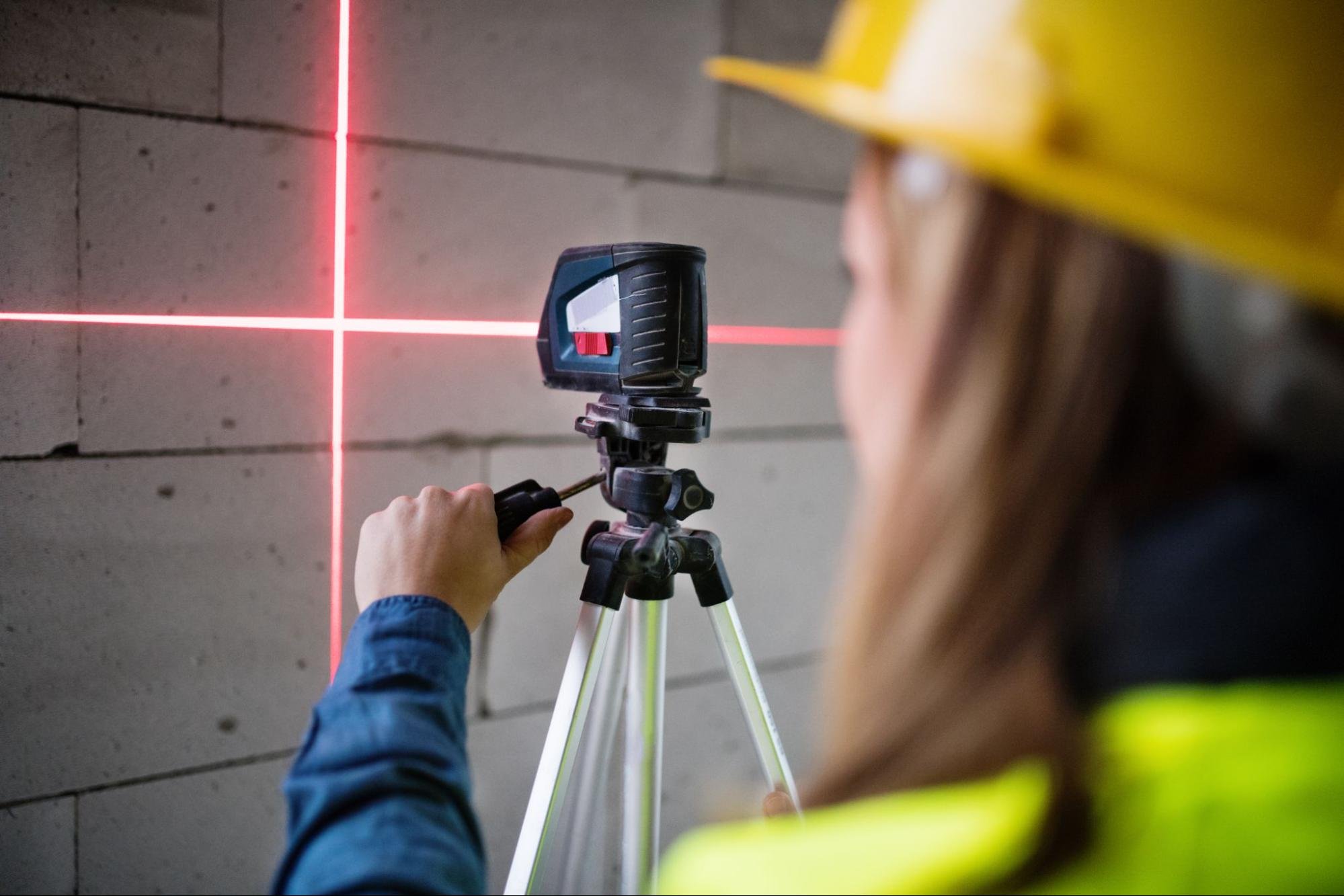
An engineer using a laser level to take precise measurements of a building

Cost Control in Building Projects

Accurate scan data helps prevent costly errors during construction or renovation. This approach reduces material waste and unnecessary rework. Businesses gain better control over project budgets with reliable data. This efficiency improves planning and reduces unexpected expenses. Digital records can also be reused for future projects. This benefit supports long-term cost management for building assets.

When to Invest in 3D Scan to CAD

Businesses often evaluate this service when dealing with outdated building plans or complex renovations. This need arises in facilities with frequent layout changes or expansions. Companies managing large industrial sites benefit from accurate spatial data. This approach reduces delays caused by unclear or missing information. Organizations with updated and reliable drawings may not require immediate adoption. This evaluation helps align investment with actual operational needs.

3D Scan to CAD Use Cases

3D scan to CAD supports a wide range of applications in commercial and industrial buildings. This process helps improve design accuracy, facility management, and compliance. Businesses use it to manage complex structures and large-scale environments. This versatility makes it valuable across multiple stages of building lifecycles.

Renovation and Retrofit Projects

Renovation projects require accurate knowledge of existing building conditions. This process provides precise layouts that guide design decisions. Engineers use scan data to plan modifications without disrupting operations. This accuracy reduces conflicts between new designs and existing structures. This approach improves coordination across project teams. This result leads to smoother and more efficient renovations.

Facility Management and Space Planning

Facility managers use CAD models to monitor and optimize building layouts. This data helps track assets, utilities, and spatial usage. Teams can plan space utilization more effectively using accurate models. This insight supports better operational decisions within large facilities. This approach also improves safety and accessibility planning. This capability enhances overall building performance.

Compliance and Documentation

Accurate as-built drawings help businesses meet regulatory and safety requirements. This documentation reflects the building's current condition. Teams use these records for inspections, audits, and certifications. This accuracy reduces risks associated with outdated plans. This process supports adherence to industry standards and codes. This benefit strengthens compliance across operations.

3D Scan to CAD Process Steps

The 3D scan-to-CAD workflow follows a structured process to convert buildings into accurate digital models. This process includes scanning, data processing, and CAD modeling stages. Each stage builds on the previous one to maintain accuracy and usability. This sequence helps businesses achieve reliable and consistent results.

Scanning and Data Capture Stage

Surveyors begin by preparing the site and positioning scanning equipment. This step ensures full coverage of the building and its features. Scanners capture detailed spatial data from multiple angles. This method reduces gaps and improves overall data completeness. This dataset serves as the basis for all subsequent processing steps. This stage determines the final model's accuracy and reliability.

Architect reviewing a 3D scan to CAD model, comparing point cloud data with building drawings on screen

Mesh Processing and Data Structuring

Engineers process the collected data into a structured point cloud and mesh. This step includes cleaning noise and aligning multiple scans. The combined dataset forms a complete digital representation of the building. This process ensures data consistency and usability. This optimization prepares the model for CAD conversion. This preparation supports efficient downstream workflows.

CAD Modeling and Validation Stage

Engineers convert processed data into CAD drawings and BIM-ready models. This step involves creating floor plans, sections, and elevations. The model is verified against scan data for accuracy. This validation ensures compliance with project requirements and tolerances. This output integrates with design and construction systems. This result supports planning, analysis, and execution.

Before and After the Process

Before adopting 3D scanning to CAD, teams relied on manual measurements and outdated drawings. This approach leads to inconsistencies and delays in building projects. After implementation, teams work with accurate digital models that reflect real conditions. This shift improves coordination between design, engineering, and construction teams. This clarity reduces errors and speeds up project timelines. This progression highlights the value of digital workflows in building management.

Choosing a 3D Scan to CAD Provider

Choosing the right technology service provider affects the quality and reliability of building data. This decision requires evaluating technical capability and industry experience. Businesses need partners who understand commercial and industrial environments. This selection helps reduce risks and improve project outcomes.

Technology and Equipment Capabilities

Providers use advanced laser scanners designed for large-scale building environments. This equipment captures detailed spatial data across complex structures. High-quality tools improve accuracy and efficiency during scanning. This capability supports both indoor and outdoor applications. This reliability ensures consistent results across projects. This factor plays a critical role in data quality.

Expertise in Building and Surveying Projects

Experienced providers understand the challenges of scanning active facilities. This expertise helps manage access, safety, and operational constraints. Teams with industry knowledge can deliver accurate and usable outputs. This experience reduces errors and improves efficiency. This understanding supports better coordination with project stakeholders. This advantage leads to smoother project execution.

Turnaround Time and Communication

Clear communication ensures alignment between clients and service providers. This approach helps define expectations and project deliverables. Providers should offer realistic timelines and regular updates. This responsiveness supports better planning and decision-making. This collaboration improves workflow efficiency and results. This factor enhances overall project success.

3D Scan to CAD Challenges

3D scan to CAD involves technical considerations that businesses should understand. This process requires proper planning to manage data and site conditions. Companies that recognize these factors can avoid delays and inefficiencies. This awareness supports better implementation and results.

Managing Large Building Data Sets

Scanning large facilities generates extensive datasets that require advanced processing systems. This data can slow workflows if not handled efficiently. Engineers must organize and optimize files to make them easier to use. This preparation improves access and collaboration across teams. This capability supports long-term data management strategies. This approach ensures smooth project execution.

Site Conditions and Scanning Limits

Certain building conditions, such as reflective surfaces or restricted areas, affect scanning accuracy. This limitation requires careful planning during data capture. Environmental factors also influence results during scanning. This challenge may require additional processing or adjustments. Skilled teams use proven techniques to improve accuracy. This understanding helps set realistic expectations for outcomes.

Future Value of 3D Scan to CAD

3D scan to CAD supports long-term building management and digital transformation. This process aligns with modern workflows used in construction and facility operations. Companies that adopt this approach gain better control over their assets. This direction supports efficiency and continuous improvement.

Staying Competitive With Digital Building Models

Digital building models allow businesses to manage assets with greater accuracy. This capability improves collaboration across design and operations teams. Companies integrate scan data with building management systems and planning tools. This connection supports faster decision-making and improved efficiency. This advantage helps businesses adapt to changing project demands. This position strengthens competitiveness in evolving industries.

Turning Buildings Into Digital Assets

3D scan to CAD converts physical structures into reusable digital resources. This approach allows businesses to store and access building data when needed. Companies reuse these models for maintenance, upgrades, and planning. This efficiency reduces repeated work and saves time. This digital archive preserves critical building information. This benefit creates long-term value across operations.

Advance Processes With 3D Scan to CAD

Commercial and industrial buildings require accurate data to support efficient operations and planning. 3D scan to CAD introduces a reliable method for capturing and using real-world conditions. This approach improves coordination, reduces errors, and supports better project outcomes. Companies that adopt this solution position themselves for stronger performance and long-term control over their building assets.


See how accurate scanning and CAD solutions support better project outcomes. Read more on the LNE Surveys blog today.

What to Expect During a 3D Scanning Service for Your Commercial Property

What to Expect During a 3D Scanning Service for Your Commercial Property

Commercial property managers and business owners rely on accurate building data for planning, compliance, and operational purposes. Traditional surveys often leave gaps, which can delay projects and inflate costs. A 3D scanning service solves these issues by capturing accurate digital replicas of spaces and structures. Understanding the process allows businesses to prepare effectively and benefit from reliable data across multiple uses.

Why Businesses Select a 3D Scanning Service

A 3D scanning service provides businesses with reliable data that manual surveys cannot achieve. It captures millions of points quickly and creates a precise digital model of a property. This accuracy improves renovation planning, compliance, and project coordination. Construction, property management, and facility maintenance companies now see it as an essential step rather than an optional upgrade.

Accuracy That Traditional Surveys Cannot Match

Laser scanners measure distances with extreme precision, often within millimeters. Manual methods using tape or basic tools cannot match this standard. Renovation teams benefit because accurate measurements reduce design errors before construction starts. Facility managers also gain detailed records for inspections and upgrades. Compliance officers trust the scans since every entryway, stairwell, and system is clearly documented.

Time Savings That Keep Projects Moving

Manual surveys take days or weeks, depending on the building size. A 3D scanning service condenses the process into hours with far greater detail. Contractors can proceed to the design or construction stages without waiting for delayed survey results. Repeat site visits are rarely required because all necessary data is captured in one session. This speed enables easier maintenance of tight schedules and avoidance of costly overruns.

Scanning That Scales to Any Property Size

The technology adapts to small offices, expansive warehouses, or complex retail layouts with equal effectiveness. Each scan is merged into a seamless digital model regardless of the property scale. For owners of manufacturing plants, healthcare facilities, or educational campuses, the consistency ensures no detail is lost. Both new construction and older properties benefit from the same approach. This flexibility makes scanning valuable for diverse commercial environments.

Preparing for a 3D Scanning Service

Preparation directly affects the quality of the 3D scanning service results. When spaces are cleared and staff are informed, technicians can move efficiently through the site. Managers who set goals with providers before the scan avoid confusion later. Careful planning ensures that the final deliverables accurately reflect the property and meet business needs.

Preparing Access and Site Readiness

Scanners require clear access to all rooms and passageways to capture consistent data. Clutter, such as equipment or storage boxes, should be removed before the session. Technicians must move freely, so staff may need to adjust routines during the scan. Areas like stairwells, loading docks, or mechanical rooms should remain unobstructed. Proper preparation keeps the process efficient and prevents costly repeat scans.

Setting Goals With the Provider

Property managers should meet with the scanning provider to clarify expectations. The discussion should cover whether deliverables include CAD drawings, BIM files, or 3D walkthroughs. Compliance requirements may also dictate additional detail for safety or accessibility. Early communication prevents misunderstandings about what the final files will include. Providers can also recommend the best output based on how the client will use the data.

Scheduling Scans Around Operations

Many properties remain open while scanning occurs, so timing matters. Managers should select scanning hours that cause minimal disruption to staff and customers. In busy facilities, providers may suggest scanning outside operating hours. The process can span multiple days for large-scale projects, so planning must account for extended activity. Effective scheduling enables scanning to proceed smoothly without disrupting daily operations.

A detailed 3D architectural rendering of a commercial property on dual computer monitors

What Happens During a 3D Scanning Service

A 3D scanning service follows a systematic process that strikes a balance between accuracy and efficiency. Technicians use advanced equipment to capture millions of points across surfaces. Each scan covers a portion of the property, which is then stitched together to form a complete model. The result is a reliable digital version of the entire building.

Setting Up Equipment Safely

Technicians place scanners on tripods or mobile stands in key locations. The equipment utilizes non-invasive laser beams to measure distances in occupied spaces accurately. Safety protocols are followed in areas with heavy machinery or electrical systems. Providers also take care to avoid interfering with the client’s property. This structured setup process ensures both accuracy and safety before scanning begins.

Capturing Data Step by Step

Each scan covers a wide radius, capturing fine detail of walls, ceilings, and objects. Multiple scans are performed throughout the building to ensure complete coverage. Overlapping data sets are later merged into a seamless 3D model. This step-by-step approach eliminates blind spots and creates uniform results. The detailed model can represent complex elements such as piping, beams, and ductwork.

Checking Quality in Real Time

Technicians monitor the results as scanning progresses. If gaps or distortions appear, adjustments are made immediately to correct them. Areas with obstructions may be rescanned on the spot. This live review prevents incomplete data from reaching the final stage. Property managers benefit from knowing that accuracy is verified throughout the session.

Deliverables From a 3D Scanning Service

The outputs from a 3D scanning service are practical tools for planning, management, and compliance. Deliverables range from raw point cloud data to polished 3D models. Each file type serves a specific purpose, depending on the project scope. Businesses can use them for design, leasing, safety, or long-term maintenance.

Point Clouds and 3D Models Explained

The point cloud is the first output, showing millions of points replicating the property. Providers create CAD or BIM files tailored for architects and engineers from these. These models integrate directly into design and construction software. They reduce project risks by providing a reliable foundation. Contractors save time and money when building off precise digital records.

Walkthroughs and Visual Tools

Some stakeholders prefer visual formats over technical files. For this purpose, providers offer 3D walkthroughs, panoramic images, or virtual tours. These tools make it easier for non-technical audiences to understand layouts and conditions. Leasing managers can present properties to prospective tenants using these visuals, and marketing teams also use them to showcase spaces effectively.

A male surveyor operating a theodolite to measure and map a commercial property.

Compliance and Maintenance Documentation

Detailed scans record critical features like fire exits, stairways, and HVAC systems. This data helps property managers maintain safety standards and prepare for audits. Maintenance crews use the digital files to plan system upgrades or repairs. Accurate documentation of existing conditions helps teams avoid costly mistakes. These deliverables will become valuable assets for consistent property management in the long term.

Common Issues in a 3D Scanning Service

Commercial properties sometimes present challenges during scanning, but providers have strategies to manage them. Large spaces, busy environments, and heavy data files can slow progress. Awareness of these issues helps managers set realistic expectations. Understanding how providers handle them also builds confidence in the process.

Scanning Complex or Expansive Properties

Warehouses, stadiums, or multi-level offices require multiple scans for full coverage. Irregular layouts can create alignment challenges that technicians must resolve. Overlapping scans help create a seamless digital model despite complexity. Technicians may revisit areas to confirm accurate file stitching. This methodical approach ensures no sections are overlooked.

Working in Active Commercial Settings

Scanning often takes place while employees or customers remain on-site. Moving people or equipment can disrupt the laser capture. Providers may pause scanning to allow activity to clear before resuming. Managers help by informing staff and scheduling low-traffic periods for scanning. These steps enable high-quality data collection without affecting business continuity.

Managing Large Data Files

Scans produce massive files that require strong storage and computing power. Providers usually deliver optimized versions to make them easier to handle. Clients may receive both raw and processed files for flexibility. Discussing file format preferences in advance avoids problems later. Proper file management ensures that the data remains usable across different platforms.

Maximizing Benefits From a 3D Scanning Service

A 3D scanning service delivers benefits that extend far beyond immediate project needs. Data from the scans supports planning, maintenance, compliance, and strategy. Businesses that apply the information across departments see a strong return on investment. These benefits grow over time as the digital models remain useful for future decisions.

Data for Renovations and Expansions

Architects and contractors rely on scans to plan expansions or remodels. The files provide a precise foundation to build upon, reducing surprises. Construction teams save money by avoiding errors during the build phase. Managers can present expansion proposals with confidence, leveraging reliable data. The long-term accuracy makes scans valuable even years after they are collected.

Facility Management Advantages

Maintenance teams use digital twins to track systems and plan upgrades. HVAC units, wiring, and plumbing are documented clearly for reference. Repairs and upgrades are more straightforward when teams know the exact locations of systems. Routine inspections are also faster with a digital map of the property. Having a permanent digital record supports efficient and informed management.

Data That Drives Strategy

Property managers use scanning data to support financial and compliance decisions. Accurate layouts give them leverage during lease negotiations with tenants. Safety compliance becomes easier when records match reality. Data also informs sustainability upgrades, such as energy-efficient systems. Reliable information creates confidence in every strategic choice for the property.

Gain the Advantage With a 3D Scanning Service

A 3D scanning service gives businesses the edge by turning property details into actionable data. Instead of relying on outdated surveys, you gain a precise foundation for every project and decision. With reliable documentation, you reduce risks, streamline workflows, and strengthen long-term planning. Moving forward with this technology is about keeping pace and positioning your property for smarter growth and future opportunities.


Stay ahead with expert perspectives on 3D scanning and As-Built surveying—visit the LNE Surveys blog today.

3D Scanning vs Traditional Surveying: Which Is Better for Existing Buildings?

3D Scanning vs Traditional Surveying: Which Is Better for Existing Buildings?

In the world of building documentation and renovation, precision is everything—especially when working with existing structures that have aged, shifted, or been modified over time. For decades, traditional surveying was the gold standard for measuring buildings. But with the emergence of 3D Scanning technologies, the surveying industry is undergoing a major transformation. So, when it comes to analyzing and planning improvements for existing buildings, is 3D Scanning the superior choice—or does traditional surveying still have its place? Let's explore the two methods in depth.

Understanding the Basics of 3D Scanning in Building Surveys

3D Scanning uses laser-based or photogrammetric technology to create a digital, three-dimensional representation of a structure. The scanner rapidly collects millions of data points, producing what is known as a "point cloud." This cloud is then processed to generate accurate 3D models of architectural features, including floor plans, elevations, and MEP systems. For existing buildings with undocumented changes or hard-to-access areas, 3D Scanning can unveil structural truths that tape measures and total stations may miss.

Traditional Surveying Methods and Their Role in Construction

Traditional surveying relies on manual instruments like total stations, theodolites, measuring tapes, and GPS systems. Surveyors use these tools to capture angles, distances, and elevation data through careful calculations. Although slower and more labor-intensive than modern alternatives, traditional surveying is a tried-and-true method that continues to serve infrastructure and civil engineering projects effectively. It remains beneficial in open outdoor environments or where precise control points are required.

Accuracy Levels of 3D Scanning vs Traditional Surveying

When it comes to precision, both 3D Scanning and traditional surveying can produce highly accurate results—if applied correctly. However, 3D Scanning shines in its ability to capture an entire scene at once, without relying on manual placement of points. The resulting data minimizes human error and eliminates missed measurements. In contrast, traditional surveying captures only what is manually marked or measured, meaning any oversight can lead to costly rework or design revisions.

Tolerance Ranges and Human Error

3D Scanning systems offer sub-millimeter accuracy in some models, which can be crucial for mechanical retrofits or structural modifications. Traditional surveying depends on the surveyor's technique, and small errors can accumulate and compound across large areas.

Surface Complexity and Environmental Challenges

Curved or irregular surfaces are captured effortlessly by 3D Scanners, while traditional methods often struggle with anything that isn't flat or linear. Shadowing, clutter, and interior obstacles further complicate manual surveying tasks.

3D Scanning Efficiency in Capturing Complex Interiors

For existing buildings—especially those with complex layouts, narrow crawlspaces, or layered MEP systems—3D Scanning provides unmatched efficiency. The process captures every visible surface in a single sweep, allowing technicians to quickly document the current state of the building with minimal disruption. In contrast, traditional surveying might require repeated visits, physical disassembly, or estimations based on inaccessible spaces.

Data Output Formats From 3D Scanning and Their Advantages

The output of 3D Scanning is not just a static map or drawing—it's a living digital model. From point clouds, professionals can extract 2D floor plans, cross-sections, and even detailed 3D BIM models. This digital versatility empowers architects, engineers, and contractors to collaborate using shared files and simulation environments. Traditional surveys, by comparison, typically produce static CAD drawings that require manual input for revisions or simulations.

BIM Integration for Project Planning

3D scan data can be imported directly into BIM platforms, enabling clash detection, space planning, and coordination with mechanical systems. This allows for more accurate project planning in real-world conditions.

Real-Time Collaboration With Stakeholders

Digital scans enable multiple teams—often working remotely—to explore the model in real-time. This accelerates decision-making and reduces the need for return site visits.

Time and Labor Considerations in 3D Scanning Workflows

Speed is one of the most significant benefits of 3D Scanning. While a traditional survey of a commercial building may take several days or weeks, depending on its size and complexity, a 3D Scanning crew can complete fieldwork in a fraction of that time. The back-end data processing is also faster thanks to automated workflows and powerful modeling software. This time savings translates to faster project launches and fewer project delays.

Safety and Accessibility Factors in Existing Buildings

One of the most underappreciated advantages of 3D Scanning is its ability to reduce the physical risks involved in field measurements. In older buildings, where floors may be unstable or spaces difficult to access, sending a technician in with a tape measure poses real safety concerns. Scanning allows teams to maintain a safe distance while capturing detailed information. Traditional surveying often places surveyors in precarious positions, especially in attic spaces, mechanical rooms, or on rooftops.

Mitigating Hazards Through Remote Capture

Because 3D Scanners can collect data from a distance or be mounted to drones or robotic systems, the need to enter unsafe zones is drastically reduced. This enhances worker safety and compliance.

Avoiding Manual Re-Entry to Hazard Zones

Since scans can be referenced repeatedly, teams do not need to re-enter dangerous areas to double-check dimensions or take additional measurements. The initial scan becomes the definitive record.

Cost Comparison: 3D Scanning vs Traditional Surveying

Cost is always an important consideration when choosing a survey method. While 3D Scanning equipment and software have a higher upfront cost, the long-term savings from reduced labor, fewer errors, and faster turnarounds often make it a smarter investment for existing buildings. Traditional surveying may have lower initial costs but can become more expensive due to extended labor hours, rework, or incomplete data.

Project Types That Benefit Most From 3D Scanning

Certain types of projects almost always benefit from using 3D Scanning over traditional methods. These include historic preservation efforts, renovations of occupied buildings, and adaptive reuse designs. In all these cases, the need for precise as-is documentation makes 3D Scanning the preferred method. It is also advantageous when retrofitting modern systems—like HVAC or electrical upgrades—into older spaces that lack updated records.

Adaptive Reuse and Architectural Renovations

Older buildings rarely align with their original drawings, making 3D Scanning an ideal tool for uncovering undocumented modifications or additions. This eliminates surprises during construction.

Mechanical and MEP Coordination

Engineers can use scans to determine exactly where to route pipes, ducts, or wiring, thereby avoiding the need for demolition of walls or ceilings during installation. This minimizes disruption and cost.

Limitations and Learning Curves With 3D Scanning Tools

Despite its advantages, 3D Scanning does have a learning curve. Technicians must be trained not only in operating the scanner but also in interpreting scan data and using modeling software. There is also the risk of data overload; scan files are enormous and require powerful computing tools to process them effectively. Additionally, while scanners can't see through walls or detect hidden systems, some clients may incorrectly assume they can.

Man in a  hard hat and vest next to a commercial building. 

Traditional Surveying's Place in Large-Scale Site Development

While 3D Scanning dominates in indoor and complex structural environments, traditional surveying is still relevant—particularly for large-scale site development. Open land surveys, elevation grading, and boundary staking are often better suited to GPS-based or total station methods. These tools remain essential for establishing control points or legal boundaries that Scanning cannot determine on its own.

The Human Element in 3D Scanning and Surveying Accuracy

Technology can streamline the measurement process, but expertise still matters. A highly trained traditional surveyor can often catch anomalies or errors that machines might not interpret correctly. Similarly, a 3D scan is only as good as the technician who sets up and processes the data. Knowing where to place the scanner, how to control for light or reflective surfaces, and how to clean up noisy data are skills that come with experience.

The Role of 3D Scanning in Ongoing Facility Management

Once construction or renovation is complete, 3D Scanning continues to deliver value by supporting facility management and building operations. Digital scans serve as an exact reference for locating systems, tracking structural changes over time, and planning future improvements without having to guess what's behind walls or ceilings. Facilities teams can access these models remotely to diagnose problems, coordinate upgrades, or verify vendor installations. This creates a permanent as-built record that evolves with the building, reducing the likelihood of redundant work or miscommunication. Traditional surveying rarely offers this level of long-term insight. In this way, 3D Scanning transitions from a one-time measurement tool into an essential part of a building's lifecycle strategy.

Future Outlook for 3D Scanning in the Survey Industry

The future of building surveys clearly leans toward automation and digital integration, and 3D Scanning is at the heart of that evolution. As software becomes more user-friendly and hardware more affordable, the barriers to entry are shrinking. In the coming years, we can expect 3D Scanning to become the standard in most architectural and engineering workflows, especially for renovations, retrofits, and facility management applications.

Making the Right Choice for Your Existing Building Project

Choosing between 3D Scanning and traditional surveying depends on several factors: the condition of the building, the level of detail required, budget constraints, and the project timeline. For most existing building documentation projects where accuracy and completeness are key, 3D Scanning offers clear advantages. However, traditional surveying remains vital for certain field conditions and legal documentation needs. The best results often come from using both in combination—leveraging the speed and accuracy of 3D scans with the foundational framework of conventional control points.

3D Scanning vs Traditional Surveying: Not A Zero-Sum Game

The choice between 3D Scanning and traditional surveying is no longer a binary one. As technology evolves, the industry is learning how to blend the strengths of both methods. For most existing building surveys, 3D Scanning provides a faster, safer, and more comprehensive path to informed decision-making. However, traditional techniques still hold value where legal boundaries and outdoor environments are concerned. Ultimately, the best solution depends on your project goals—and the expertise behind the tools you use. Check out our LNE Surveys blog to learn more about different scanning methods and how they can help your next commercial development project.

Exploring the Different Industries That Benefit From 3D Scanning Services

Exploring the Different Industries That Benefit From 3D Scanning Services

3D scanning technology has revolutionized numerous industries, enabling precision, efficiency, and cost-effectiveness. 3D scanning allows businesses to streamline operations, improve product development, and enhance quality control by capturing detailed three-dimensional representations of objects, environments, or even entire buildings. From engineering and healthcare to entertainment and heritage preservation, this technology is transforming the way professionals work across various sectors. This article will explore the different industries that benefit from 3D scanning services and how they utilize this cutting-edge technology.