When evaluating pre-existing commercial buildings, a professional survey company does more than take measurements.
When evaluating pre-existing commercial buildings, a professional survey company does more than take measurements.
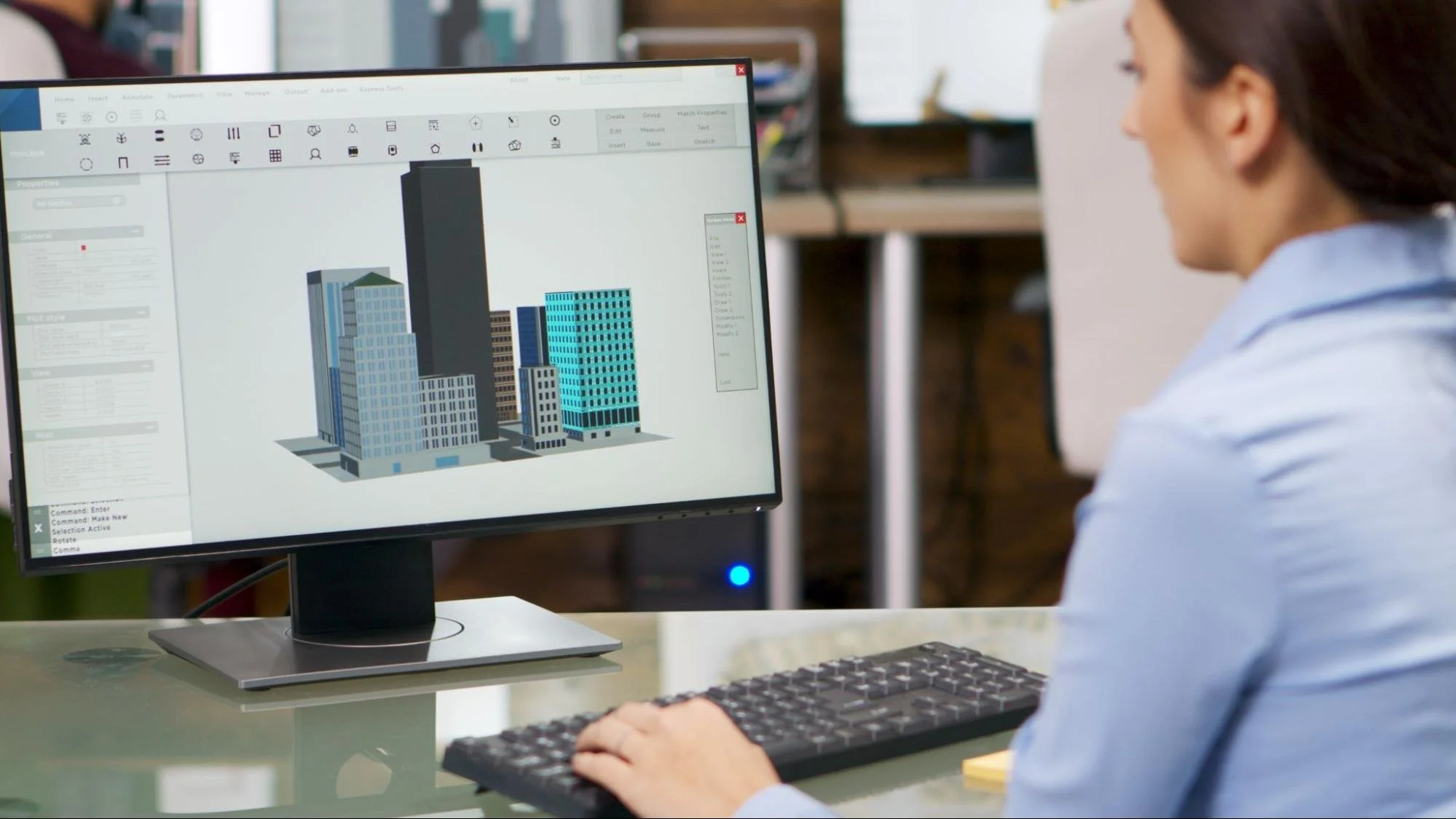
In the modern commercial real estate industry, Building Information Modeling (BIM) has become a powerful tool for maximizing properties' functionality, safety, and profitability.
In commercial real estate and construction, precision and efficiency are everything. Commercial buildings require accurate data to support informed decisions, from architectural planning to structural modifications.
Accurate data collection is essential for informed decision-making in the evolving world of architecture, engineering, and construction (AEC). Traditional surveys have long served this role, providing foundational information for planning and development. However, Building Information Modeling (BIM) 's emergence has revolutionized how we capture, analyze, and interact with building data. A BIM building model doesn't just replicate what traditional surveys offer—it reveals far more. This blog explores the critical insights BIM delivers that conventional surveying methods often miss.
Pre-existing commercial buildings often contain undocumented renovations, aging infrastructure, or hidden deviations from their original architectural plans.
In commercial construction and real estate, accuracy is not a luxury—it’s a requirement. Building surveys form the foundation for everything from design to compliance and future asset management.
3D scanning technology has revolutionized numerous industries, enabling precision, efficiency, and cost-effectiveness.
Hiring a reliable surveying company is critical to ensuring accuracy and compliance with legal and technical requirements in land development, construction, property sales, or infrastructure projects.
Surveying is essential in construction, engineering, land development, and cartography. It involves measuring and mapping the environment using specialized tools and techniques.
In the architecture, engineering, and construction (AEC) industry, efficiency and cost control are critical factors determining a project's success.