
Viewing entries in
Drone Surveys

How Does Drone Surveying for Construction Work?

How Does Drone Surveying for Construction Work?

Construction leaders face constant pressure to deliver accurate results without delays or cost overruns. Clear site data often determines how well a project stays on track and within budget. Traditional surveying methods can slow progress and leave visibility gaps across large or complex sites. Drone surveying for construction offers a faster and more precise way to capture and analyze site conditions. Many builders now rely on aerial data to make confident decisions and reduce risks throughout each project phase.

What Drone Surveying Means for Construction

Drone surveying for construction refers to using unmanned aerial systems to quickly collect accurate site data. This method replaces manual measurements with aerial imagery that captures large areas more quickly. It supports better planning, monitoring, and reporting across all construction phases. Business owners gain clearer insights without increasing fieldwork demands.

What Drone Surveying Means on Site

Drone surveying uses aerial devices equipped with cameras and sensors to map construction sites. These drones follow pre-programmed routes to capture consistent and overlapping images. This process turns raw visuals into accurate digital maps and models through specialized software. Compared to manual surveying, this approach reduces time spent on the ground and improves coverage. It also limits disruptions to ongoing construction activities and enhances workflow efficiency. Many construction firms now integrate this method into their daily operations for better data access.

Types of Data Captured by Drones

Drone surveys capture detailed visual and spatial data that support construction planning and monitoring. This data includes high-resolution images used for mapping and progress tracking. Additionally, drones measure elevation changes, which help guide grading and drainage decisions. They also produce 3D models that show terrain and structural development. Volume calculations for materials like soil and gravel become more accurate with aerial measurements. These insights help project teams manage resources and timelines more effectively.

How Drone Surveying Works on Site

Drone surveying follows a structured workflow that converts aerial images into actionable construction data. This process begins with planning and continues through data collection and analysis. Each stage focuses on accuracy, safety, and efficiency. Project teams use the results to guide decisions and improve site performance.

Pre-Flight Planning and Setup

Drone surveying starts with detailed planning that aligns with site conditions and project goals. Operators define flight paths that cover the entire area with proper image overlap. They also check weather conditions, airspace restrictions, and site hazards before launching. Ground control points are placed to improve measurement accuracy during processing. This preparation aligns aerial data with real-world coordinates for reliable results. Coordination with site teams helps avoid disruptions and maintain efficient operations.

Drone Data Collection Process

Drones collect thousands of images during each flight to cover the entire construction site. These devices follow automated paths that maintain consistent altitude and spacing. This approach improves data quality and ensures full site coverage without gaps. Operators monitor flights in real time to maintain safety and accuracy. Drones can access difficult or unsafe areas without risking worker safety. This method allows faster data collection compared to traditional surveying techniques.

Processing Data into Insights

Specialized software converts drone images into maps, models, and measurable data. This process aligns images and calculates distances, elevations, and volumes with precision. Teams use these outputs to analyze terrain and track construction progress. The results are often shared through cloud platforms for easy access by stakeholders. This accessibility allows managers to review updates without visiting the site. Clear insights enable faster, more informed decision-making across the project.

A drone inspecting a construction site for mapping, measurements, and progress tracking

Integrating Drone Data Into Workflows

Drone surveying data becomes valuable when teams use it in daily construction decisions. This integration connects aerial insights with planning, budgeting, and site coordination. It helps teams move from raw data to practical actions that improve efficiency. Business owners gain clearer visibility into operations without relying on fragmented reports.

Using Drone Data in Project Planning

Project teams use drone-generated maps to guide early planning and layout decisions. These visuals accurately depict site conditions, helping avoid design conflicts. Planners can adjust layouts based on actual terrain data rather than assumptions. This approach reduces revisions during later construction phases. Updated site models also help teams coordinate tasks more effectively. As a result, planning becomes more precise and aligned with actual site conditions.

Supporting Daily Site Coordination

Drone data supports daily coordination by giving teams a shared visual reference of the site. Managers can review updated maps during meetings to track progress and assign tasks. This clarity reduces miscommunication between teams working on different areas. Supervisors can quickly identify delays or inconsistencies and respond accordingly. Access to current visuals helps align field crews with project goals. This visibility improves overall site efficiency and coordination.

Improving Budgeting and Cost Control

Accurate drone data helps estimators and managers make better financial decisions throughout the project. Volume measurements allow teams to track material usage and adjust orders in real time. This insight reduces waste and prevents unexpected shortages. Cost estimates become more reliable when based on precise site data. Financial planning improves as teams monitor progress against budgets. This control helps business owners maintain profitability across the project lifecycle.

Benefits of Drone Surveying Services

Drone surveying improves project outcomes by delivering accurate data faster and more efficiently. It reduces reliance on manual labor while increasing visibility across job sites. This approach helps control costs and improve planning at every stage. Business owners gain better oversight without adding operational complexity.

Faster Project Timelines

Drone surveys collect data in hours rather than the days required by traditional methods. This speed allows teams to receive updates quickly and adjust plans as needed. Faster insights reduce delays caused by outdated or incomplete information. Project managers can respond to site changes without waiting for extended reports. Regular surveys also support continuous monitoring throughout the project lifecycle. This efficiency helps keep construction schedules on track.

Improved Accuracy and Consistency

Drone technology captures detailed images, improving measurement accuracy across the site. Automated flight paths reduce human error and provide consistent results over time. This consistency allows teams to compare data across different project stages reliably. Accurate measurements support better planning and reduce costly mistakes. This data quality also improves communication among project stakeholders. Reliable information builds confidence in decision-making processes.

Cost Efficiency Across Projects

Drone surveying reduces labor costs by limiting the need for large field teams. This method also reduces expenses associated with repeated site visits and manual measurements. Early detection of issues helps avoid costly corrections later in the project. Business owners can allocate resources more effectively with accurate data. This efficiency leads to better budget control and improved profitability. Long-term savings make drone surveying a valuable investment.

Surveyor operating a drone to inspect a building for construction analysis and site data

Safer Construction Site Monitoring

Drones allow teams to monitor hazardous areas without exposing workers to risk. This approach reduces accidents linked to difficult terrain or elevated structures. Site managers can inspect critical areas from a safe distance using aerial views. Regular monitoring helps identify safety concerns before they escalate. This oversight improves working conditions across the project. Safer environments support productivity and workforce stability.

Risks of Poor Site Data Without Drones

Construction projects often face setbacks when site data is inaccurate or insufficient. Incomplete information can lead to errors that affect timelines and budgets. These issues may not appear immediately, but often grow as the project progresses. Business owners who rely on outdated methods may encounter avoidable risks.

Costly Errors from Inaccurate Measurements

Incorrect measurements can lead to miscalculations in materials and site preparation. These errors often result in rework, increasing labor and material costs. Teams may need to revisit completed work to fix alignment or grading issues. This disruption affects both schedules and budgets. Accurate data reduces these risks and supports better planning. Without reliable measurements, small mistakes can escalate into expensive problems.

Delays Caused by Limited Site Visibility

Limited visibility into site conditions can slow decision-making and project progress. Managers may not notice issues until they become more difficult to resolve. This delay can affect multiple phases of construction and create scheduling conflicts. Teams may need additional site visits to gather missing information. These extra steps increase downtime and reduce efficiency. Better visibility helps prevent delays and keeps projects on track.

Missed Issues That Escalate Over Time

Undetected site issues can develop into larger problems if not addressed early. Small grading errors or structural concerns may worsen as construction continues. These problems often require more extensive fixes later in the project. Early detection allows teams to correct issues before they expand. Without detailed data, teams rely on assumptions that increase risk exposure. Proactive monitoring helps avoid complications that affect overall project success.

Common Uses of Drone Surveying

Drone surveying supports multiple construction activities from planning to project completion. It provides accurate data that improves coordination among teams. This method enhances visibility and communication across all stages. Projects benefit from fewer delays and better resource management.

Land Surveys and Site Planning

Accurate site mapping begins with aerial data that captures terrain conditions in detail. This data includes elevation changes, surface features, and potential obstacles across the property. Engineers rely on these insights to design layouts that align with real site conditions. Better planning supports grading, drainage, and foundation work from the start. Faster data collection also helps speed up approvals and early project preparation. Business owners gain confidence in their decisions when backed by reliable, up-to-date site information.

Progress Tracking and Reporting

Regular aerial updates provide a clear view of how construction progresses over time. These visuals allow stakeholders to monitor developments without frequent site visits. Project managers compare actual progress with planned timelines to identify gaps. This visibility improves accountability across teams working on different phases. Reports generated from updated imagery provide consistent, transparent communication. Better tracking supports informed decisions and keeps projects aligned with goals.

Volume Measurement and Materials

Precise measurements of materials help teams manage resources more efficiently on-site. Aerial data accurately calculates stockpile volumes and earthwork quantities. This information allows teams to track usage and adjust supply orders as needed. Better control reduces waste and prevents delays caused by shortages. Accurate volume tracking also supports budgeting and cost management. Business owners benefit from improved oversight of material allocation.

Inspections and Quality Control

High-resolution aerial imagery allows teams to review structures and site conditions in detail. This method identifies potential issues before they develop into larger concerns. Inspections can take place without interrupting ongoing construction activities. Clear visuals support compliance checks and quality standards across the project. Regular reviews help maintain consistent construction quality from start to finish. Early detection of problems reduces rework and improves overall outcomes.

Build Smarter With Drone Surveying Technology

Construction success depends on decisions backed by accurate, real-time data rather than assumptions. Drone surveying for construction provides a clear path to better planning, tighter cost control, and stronger coordination across teams. This approach allows business owners to respond quickly to changes while maintaining full visibility of site conditions. Companies that adopt this technology position themselves to handle complex projects with greater confidence and efficiency. Choosing smarter surveying methods today can support consistent performance and long-term business growth.

Get a clearer view of modern surveying solutions and smarter project planning. Read more on the LNE Surveys blog today.

What Are Drone Property Surveys and How They’re Changing Site Assessm

What Are Drone Property Surveys and How They’re Changing Site Assessm

Commercial owners need clear property insight that supports fast planning. Drone property surveys provide sharp aerial views that help shape decisions. This technology enables owners to exert stronger control over complex property requirements. They help teams uncover issues long before they disrupt operations. These surveys offer the speed and clarity modern sites now depend on.

Why Drone Property Surveys Change Site Assessments

Drone property surveys streamline site assessments into faster and more informed workflows. They provide owners with the details needed to manage growing property demands. Aerial views replace outdated steps that slowed commercial teams. This change enhances planning for sites of all sizes.

Fast Survey Turnarounds for Property Teams

Drones capture broad areas without long prep or staging. The output is delivered to teams within minutes after the flight concludes. Managers direct tasks with fresh visuals that reflect real conditions. This pace helps owners adjust daily plans without delays. It also supports projects that run under high time pressure. Fast updates reduce surprises that disrupt tight schedules.

More Accurate Data Than Manual Site Walks

Drones gather angles that people cannot reach safely or clearly. Each sensor captures details that highlight hidden wear zones. The output generates models with precise lines and accurate measurements. Owners make choices backed by consistent and verified data. These insights help teams reduce mistakes caused by guesswork. The accuracy brings more control to long-term planning.

Consistent Data Across All Survey Cycles

Drones follow the exact flight path during each review cycle. This consistency creates repeatable visuals that track fundamental changes. Owners compare old and new models with reliable alignment. It supports growth decisions with a strong historical context. Teams detect issues before they become significant or costly. This approach maintains steady property planning in shifting conditions.

How Drone Property Surveys Advance Assessment Methods

Drone property surveys guide owners with faster and more precise site insight. They capture details that ground checks often miss across large areas. The data support stronger planning for repairs, upgrades, and growth cycles. These surveys enable teams to manage complex property demands with consistent accuracy and reliability.

Improve Commercial Site Assessments

Drone property surveys offer owners a clearer view of large commercial areas. They replace slow walks with steady and accurate drone views. Owners receive accurate property facts that support robust project planning. This approach helps teams manage complex sites with better clarity.

Map Large Sites With Aerial Imaging

Drone mapping utilizes cameras that capture crisp aerial images along predetermined paths. The software creates models that display ground shapes and building outlines. These models help teams track growth and discover repair needs. Owners gain views that guide safe choices for long-term plans. This process improves planning cycles with steady and dependable information. It supports high-pressure projects with clear and current site facts.

Capture Key Data During Each Flight

Drones capture visuals, thermal scans, and elevation points across vast areas. Each set of data reveals patterns that teams often overlook. Owners gain insight into roof heat spots and drainage issues. These findings support clearer fixes guided by real measurements. Teams also track shifting property elements that affect site function. The data shapes planning steps backed by direct evidence.

Build Property Models With Photogrammetry

Photogrammetry builds accurate models from overlapping aerial frames. These models show slopes, edges, and alignment patterns with clean detail. The clarity helps teams plan drainage paths or grading changes. Owners follow long-term shifts that impact facility health. This method also helps compare past conditions with current views. It gives teams strong visuals that support informed project action.

Aerial shot showing the roof of a building and its rooftop terrace

Track Long-Term Property Trends

Seasonal property shifts become apparent when drone flights are repeated across cycles. Teams can easily follow surface wear, roof dips, and soil changes. These comparisons help owners plan repairs at the right time. The insight prevents issues from growing into cost-heavy problems. It also supports strategic planning for future expansion needs. Owners rely on the records to maintain stable long-range plans.

Strengthen Safety Across Commercial Properties

Drone property surveys help teams avoid risky climbs and unsafe zones. Aerial tools enable the study of tall or unstable assets without harm to staff. Owners get real insight while grounded crews stay protected. The process builds safer workflows across commercial environments.

Reduce Roof Risks for Facility Crews

Drones scan roof surfaces without exposing teams to unsafe heights. The camera collects crisp visuals across each roof tile or seam. This process helps staff avoid slips or falls from worn surfaces. Owners study every angle without setting foot on the structure. The views guide maintenance choices based on the actual health of the roof. It reduces safety risks associated with manual rooftop checks.

Reveal Hard-To-Reach Structural Areas

Drones navigate tight industrial spaces with steady flight control. They capture angles blocked by equipment, storage racks, or tall walls. These angles reveal hidden cracks or stress points in the material. Owners adjust repair plans with real knowledge of these findings. Staff stay safe while drones handle complex navigation. This process reduces blind spots across busy commercial areas.

Support Safer Job-Site Planning

Drone views help leaders map safe movement zones for crews. The images highlight unstable soil, weak surfaces, or sharp grade changes. Teams create work paths based on real hazard positions. Owners reduce injury risks through careful planning informed by visuals. It strengthens coordination for multi-phase build schedules. Safety decisions improve with dependable aerial evidence.

Support Builds and Facility Operations

Drone property surveys support owners during builds and long-term upkeep. They help teams monitor progress with clean and steady visuals. Managers utilize drone data to create repair budgets and develop long-term plans. This support covers both new construction and aging commercial assets.

Track Construction Progress Clearly

Drones document each construction phase with reliable aerial views. Owners follow framing progress, roof changes, and grading shifts. These visuals help leaders coordinate teams on active sites. The data keeps partners aligned with real progress. It also allows owners to confirm that tasks follow set plans. Progress checks move faster due to consistent visual updates.

Guide Maintenance for Aging Assets

Aging structures shift as weather, use, and load patterns change. Drone surveys reveal cracks, leaks, and wear across older zones. Managers update repair plans based on these accurate visuals. They maintain health stability with targeted maintenance. Owners avoid wasted costs on misjudged repair needs. The insight supports long-term stability for these assets.

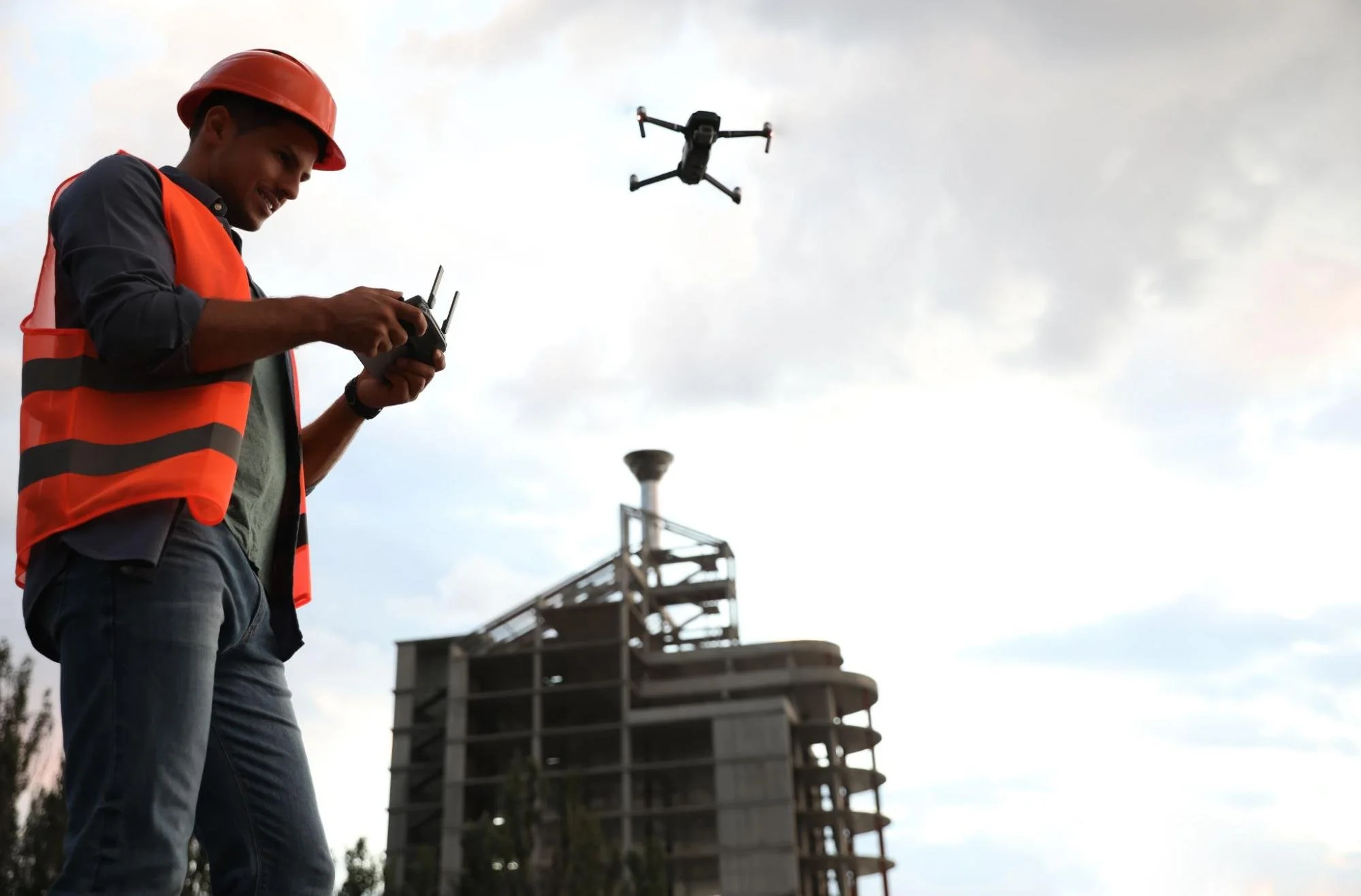
Safety-vested engineer controlling a drone during a commercial property survey

Improve Communication Across Teams

Drone visuals help teams share property details without confusion. Each model gives the same view to all departments. Managers explain needed changes with direct images and models. The shared view reduces time spent resolving conflicting reports. Owners make faster decisions supported by precise details. These visuals improve teamwork during complex property cycles.

Plan Repair Budgets With Real Data

Drone data helps owners create budgets based on actual conditions. Teams compare past and present views to measure wear patterns. This comparison shapes accurate cost forecasts for repairs. Owners avoid unexpected expenses associated with hidden property issues. The clarity helps projects stay on a financial track. It supports transparent planning across long-range cycles.

Following Commercial Drone Regulations

Drone property surveys must adhere to safety rules governing flight zones. Commercial sites require licensed operators who are familiar with these standards. A skilled partner protects owners from legal problems. This structure ensures that each survey remains safe and compliant.

Hire Licensed Drone Operators

Licensed drone operators follow strict rules set for air safety. They manage drone paths around sensitive structures or equipment. Their training supports safe behavior in busy property spaces. Owners trust these operators due to their proven track records of skill. It protects buildings and people during each aerial capture. The process ensures that commercial surveys remain safe and reliable.

Protect Privacy With Secure Data

Drone data must be protected due to its sensitive nature. Providers use locked systems to store images and files. Access rules limit who can view key property details. This protection shields owners from data leaks or misuse. Teams follow secure steps in accordance with industry standards. It builds trust in drone survey partnerships.

Comply With Local Airspace Rules

Some commercial areas are located near controlled or restricted zones. Operators plan safe flight paths based on those air limits. They adjust the drone's height and angles to follow these rules. This structure avoids issues linked to restricted air travel. Owners benefit from safe and compliant flight behavior. It ensures each project moves ahead without legal slowdowns.

Integrating Drone Data With Facility Systems

Modern facilities achieve stronger results when drone data is linked to internal tools. These links enable owners to track site changes with high accuracy. The process also supports long-term maintenance built on real visuals. It provides property teams with a clear view that guides reliable planning and decision-making.

Connecting Aerial Insight to Digital Facility Platforms

Link drone visuals to CMMS systems for real repair planning. The models help teams map roof wear or soil shifts clearly and accurately. These files sync with BIM platforms to track asset changes. Owners follow property trends across long cycles with stable records. The connections also cut errors caused by scattered data sources. Teams work more efficiently because all details are stored in a single system. It strengthens planning steps with consistent and updated property insight.

Streamlining Decisions With Unified Aerial Records

Use drone records to guide teams during tight planning cycles. The shared files help groups align tasks without mixed reports. Managers compare old and new visuals to track property shifts. These aligned records reduce delays during repair or upgrade stages. The system keeps everyone focused on the same clear facts. Teams make faster calls backed by updated aerial insight. It supports smooth coordination across complex commercial sites.

Advance Your Site Strategy With Drone Property Surveys

Commercial sites move faster when owners rely on clear aerial insight. Drone property surveys provide teams with the detailed information needed for confident decision-making. They support steady planning across assets that shift through constant use. Now is a strong time to use these tools to guide your next property move.


Stay ahead of shifting property demands with expert updates from the LNE Surveys blog.

Why Drone Surveying Is Revolutionizing the Surveying Industry

Why Drone Surveying Is Revolutionizing the Surveying Industry

In recent years, the surveying industry has experienced a profound transformation through the rise of drone technology. Drone surveying—once considered experimental—has become a cornerstone of modern surveying practices, especially for existing commercial buildings. From streamlining inspections to delivering detailed 3D models, drones are enhancing accuracy, safety, and speed like never before.
How Drone Surveying Enhances Efficiency in Commercial Building Inspections

Time is a precious resource in the commercial real estate world. Traditional surveying techniques for commercial buildings often involve days of manual data collection, ladder work, and the use of scaffolding. Drone surveying can significantly reduce that timeline to hours.

Fast Turnaround for Property Assessments

Drone flights can be completed in a fraction of the time it takes to conduct manual inspections. This accelerated data collection is especially beneficial for real estate transactions, compliance reports, and emergency assessments.

More Data in Less Time

Modern drones equipped with LiDAR, photogrammetry, and high-resolution cameras can capture more accurate spatial data than a team of surveyors could manually. This ensures a comprehensive digital record that’s available immediately after the flight.

The Safety Benefits of Using Drone Surveying for Existing Structures

One of the most compelling advantages of drone surveying is the dramatic reduction in human risk. Existing commercial buildings—especially older or damaged ones—often pose safety concerns.

Reducing the Need for High-Risk Access

By replacing the need for rope access, scaffolding, and lifts, drones enable workers to stay safely on the ground. Inspections of roofing, exterior façades, or towers can be done without setting foot on the structure.

Mitigating Liability for Property Owners

Fewer human interactions with potentially dangerous areas mean fewer accidents and insurance claims. For commercial building owners, this represents a significant reduction in liability exposure during routine inspections.

Drone Surveying Improves Visibility and Detail for Hard-to-Reach Areas

Complex architecture is common in commercial properties, often featuring tall walls, recessed sections, and protruding HVAC systems that limit visibility for traditional survey teams. Drones overcome these challenges by maneuvering around obstacles to capture detailed angles of the entire building envelope, including walls, windows, parapets, flashing, and drainage systems. The high-resolution imagery collected is then processed into orthomosaics or 3D point clouds, creating a digital twin of the structure. This model serves as a precise visual reference for measurements, comparisons, and long-term planning.

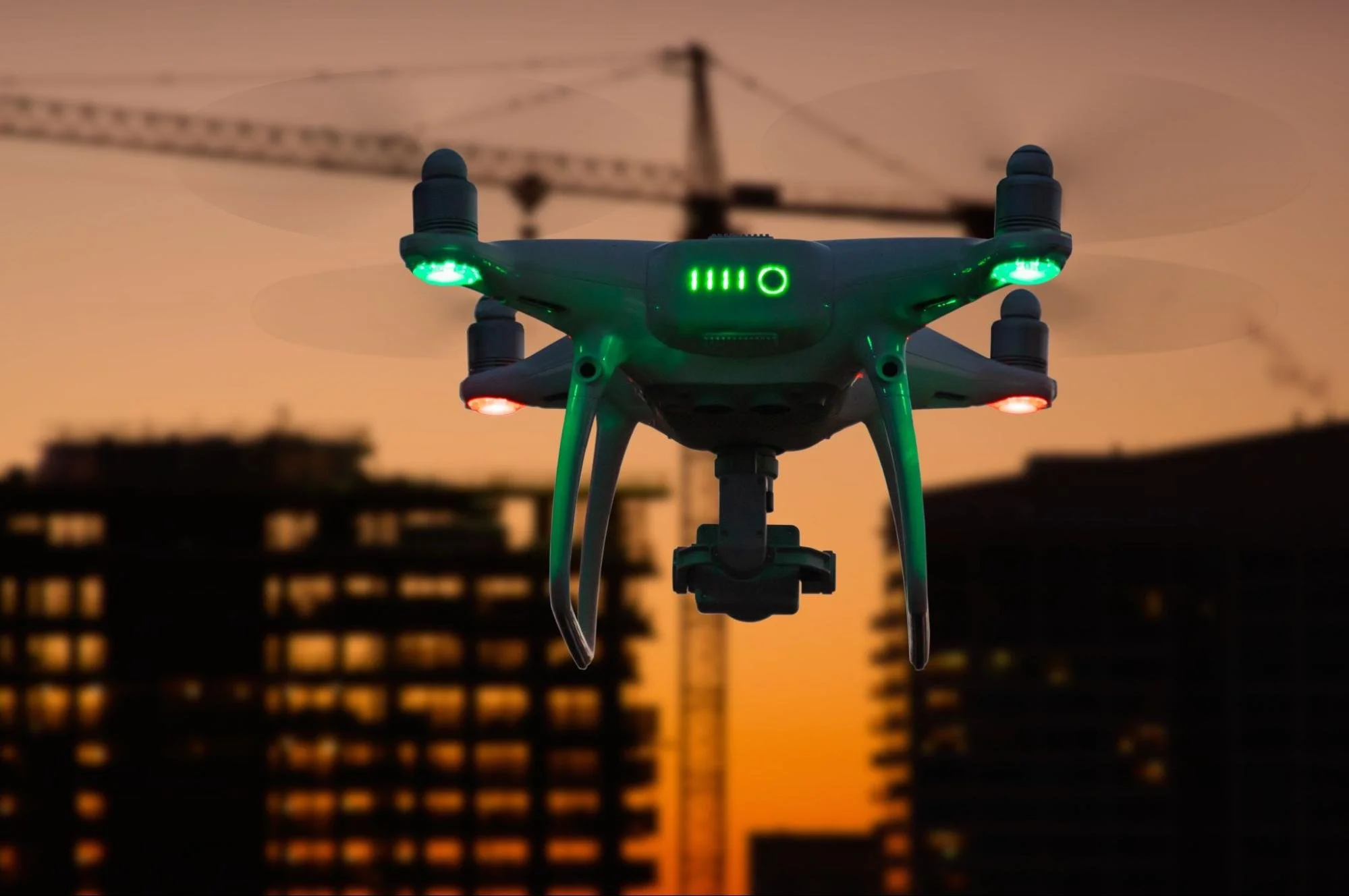
Drone with a building in the background. 

Thermal Drone Surveys Identify Hidden Issues in Commercial Buildings

Thermal drone technology elevates inspection capabilities by detecting temperature variations that are invisible to the naked eye, often signaling underlying structural or mechanical issues. These drones can identify areas of moisture intrusion in roofs or walls well before visible damage appears, helping prevent mold growth, internal decay, and costly repairs. They also pinpoint inefficiencies in HVAC and insulation systems by highlighting zones of heat loss or gain. This allows building managers to address energy waste proactively, improving overall system performance and reducing utility expenses.

Drone Surveying Streamlines the Renovation and Retrofit Process

Renovating an existing commercial building requires a detailed understanding of current conditions, and drone surveying provides the precise data needed to support confident design decisions. Aerial surveys provide accurate measurements of rooftops, walls, and site layouts, enabling architects and engineers to reduce assumptions and avoid costly mistakes. The digital models generated from drone data can be shared instantly with all stakeholders, improving collaboration and transparency throughout the project. With everyone referencing the same up-to-date information, renovations and retrofits move forward more efficiently and with fewer surprises.

Drone Surveying Reduces Operational Disruption During Assessments

Unlike traditional inspections that may require tenant notifications, limited access, or even temporary shutdowns, drone surveying offers a non-intrusive alternative that minimizes disruption. Most drone surveys can be completed entirely from the exterior, preserving the privacy and productivity of tenants in sensitive environments, such as hospitals, retail centers, and offices. Flexible scheduling enables inspections to occur during evenings or weekends, thereby further reducing interference with daily operations. Because drones require minimal setup, repeat assessments can be conducted efficiently without the need to reinstall equipment.

Enhanced Recordkeeping and Long-Term Maintenance Strategies

Drones aren’t just for one-time surveys. They offer long-term value through digital documentation that tracks changes, wear, and repair needs over time.

Creating a Visual Archive of Building Conditions

Aerial photos and models captured today serve as a benchmark for future comparisons. These visual records support long-term maintenance strategies, capital improvement planning, and risk management.

Supporting Insurance and Regulatory Documentation

Drone footage can serve as evidence during claims or audits. Insurance companies are more receptive to detailed photo documentation that supports the condition of a structure before or after an incident.

Regulatory Compliance and Reporting Made Easier With Drones

Commercial buildings must adhere to a range of regulations, from fire codes to accessibility laws, and drone surveying helps streamline compliance by providing fast and reliable documentation. Many municipalities now accept drone-generated data in place of traditional inspections, enabling building professionals to meet both local and federal standards more efficiently. With FAA-compliant operations, the imagery and reports produced can be submitted directly to governing bodies, speeding up the approval process. This same data also accelerates repair timelines, providing contractors with the clarity they need to quote accurately and begin work without delay.

Drones Make 3D Building Modeling More Accessible Than Ever

Creating a 3D model of a commercial building once required extensive labor, specialized scanning equipment, and multiple on-site visits; however, drone surveying has dramatically streamlined the process. With the ability to combine LiDAR and photogrammetry in a single flight, drones can generate highly accurate digital models that support redesigns, occupancy planning, and site evaluations. These models integrate seamlessly with asset management platforms, allowing property owners to track building components, repairs, and upgrades in a centralized system. The result is a virtual, data-rich replica of the building that enhances operational control and strategic planning.

The Cost-Effectiveness of Drone Surveying for Commercial Properties

Although drones may initially seem like a high-tech luxury, they are quickly proving to be cost-effective tools for commercial building stakeholders. By reducing the need for scaffolding, lifts, and large on-site teams, drone surveying significantly reduces labor and equipment expenses. Their ability to identify structural or moisture-related issues early allows property managers to invest in proactive repairs rather than costly emergency fixes. Over time, these savings compound—making drones a smart financial investment as well as a practical one.

Drone with buildings in the background. 

The Future of Drone Surveying in Commercial Building Management

Although drones may initially seem like a high-tech luxury, they are quickly proving to be cost-effective tools for commercial building stakeholders. By reducing the need for scaffolding, lifts, and large on-site teams, drone surveying significantly reduces labor and equipment expenses. Their ability to identify structural or moisture-related issues early allows property managers to invest in proactive repairs rather than costly emergency fixes. Over time, these savings compound—making drones a smart financial investment as well as a practical one.

Visit our LNE Surveys blog to learn more about our surveying services for customers nationwide.