

Viewing entries in
Drone Surveying

Benefits of Drone Surveying and Mapping

Benefits of Drone Surveying and Mapping

Commercial and industrial properties span large areas and complex infrastructure. Owners must understand terrain, drainage routes, and building placement before making costly decisions. Traditional surveys often take longer and disrupt active operations across busy facilities. Aerial data collection now provides property managers with faster, clearer site insight. Drone surveying and mapping help building owners evaluate land conditions with precision and speed.
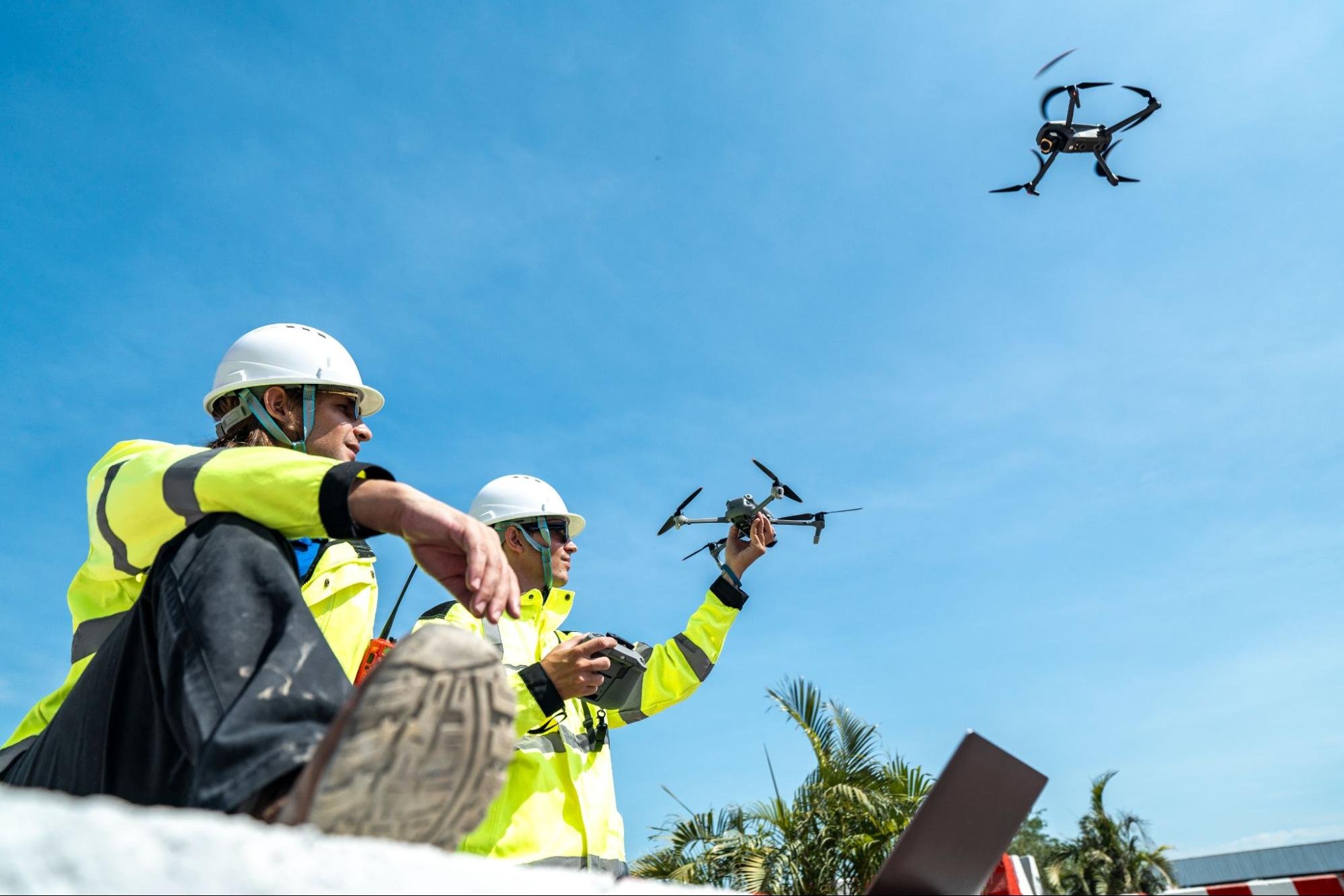
Why Drone Survey Data Matters for Sites

Drone surveying and mapping provide accurate aerial measurements for large commercial and industrial properties. Property owners rely on this data to understand terrain conditions, building placement, and infrastructure layout. Drone-generated maps deliver a wider perspective than traditional ground surveys alone. This aerial visibility helps owners plan expansions, inspections, and site management with reliable information.

Limits of Traditional Land Survey Methods

Traditional land surveys rely on crews walking the property with measurement tools and equipment. This ground method works well for smaller areas but struggles across wide industrial facilities. Survey teams often require repeated visits to capture roofs, drainage slopes, and elevated structures. These conditions slow projects and raise labor costs across large commercial sites. Drone surveying collects the same information from the air while covering far more ground quickly. This aerial approach gives engineers and property owners a more complete site picture.

Clear Visibility Across Large Industrial Facilities

Drone mapping creates high-resolution aerial images called orthomosaic maps. This orthomosaic image combines many photographs into one precise, measurable site map. Property owners can view warehouses, service roads, storage yards, and open land together. This aerial perspective helps managers evaluate land use and facility organization more clearly. Engineers also analyze drainage paths and elevation changes directly from these maps. Drone surveys, therefore, support smarter decisions across large industrial properties.

Reliable Survey Data for Compliance Planning

Drone survey data provides consistent measurements for planning and regulatory documentation. Many development permits require accurate topographic maps before construction begins. This aerial dataset supplies elevation details and boundary information needed for engineering reviews. Project teams can also repeat drone flights to track site changes over time. These consistent measurements help maintain reliable records for compliance and inspections. Industrial property owners, therefore, gain reliable documentation for long-term planning.

How Drone Surveying and Mapping Works

Drone surveying uses uncrewed aircraft equipped with high-resolution cameras and positioning sensors. This aerial technology collects detailed images while following a planned flight path across the property. Software then processes those images into measurable maps and terrain models. These digital models give engineers and facility managers a clear representation of site conditions.

Capturing High-Resolution Aerial Survey Data

Drone operators program flight routes that guide the aircraft across the entire site. This flight path allows the drone to capture overlapping photographs from multiple angles—these images capture buildings, terrain, and infrastructure features with great detail. GPS sensors log precise coordinates for every photograph during the flight. Mapping software later connects those images into a unified survey dataset. This processed map enables engineers to accurately measure distances, slopes, and site boundaries.

Converting Drone Images Into Site Models

Drone imagery becomes useful after specialized software processes the captured photographs. This processing stage creates orthomosaic maps, digital elevation models, and 3D terrain representations. Engineers use these models to analyze slopes, drainage flow, and construction areas. These visual models also reveal grading issues and potential land development constraints. For example, planners can estimate earthwork volumes before beginning construction. This modeling capability provides property owners with practical insights beyond those available from simple aerial photographs.

Survey engineer looking through a theodolite while another monitors a drone controller during a land survey; a crane is seen from behind

Integrating Drone Data With Engineering Tools

Engineering teams rarely rely on mapping software alone when reviewing survey results. This processed drone dataset is often imported into CAD or GIS systems used by engineers and planners. These systems allow teams to compare aerial surveys with building designs and utility layouts. Engineers can detect potential conflicts before construction begins. Additionally, facility managers overlay new drone surveys with earlier data for long-term analysis. This integration supports accurate planning across expanding commercial properties.

Drone Survey Accuracy and Ground Control Points

Drone surveying produces reliable measurements when surveyors calibrate aerial data with precise ground references. Commercial construction and industrial planning demand survey accuracy that supports engineering calculations. Survey teams achieve this precision through ground control points and advanced positioning systems. This calibration process helps drone mapping meet professional surveying standards used across construction and infrastructure projects.

How Ground Control Points Improve Mapping Accuracy

Ground control points are marked targets placed across a survey site before a drone flight begins. Surveyors measure each control point using high-precision GNSS receivers connected to satellite positioning networks. These reference points act as anchors that align drone imagery with real-world coordinates. Mapping software uses these anchors to correct small positioning shifts in aerial photographs. This correction process improves the accuracy of orthomosaic maps and terrain models. Engineers can then rely on drone survey data when calculating elevations, drainage slopes, and property boundaries.

RTK and PPK Positioning in Drone Surveys

Professional drone surveys often use positioning systems called RTK and PPK. RTK stands for Real-Time Kinematic positioning, which corrects GPS signals in real time during drone flight. PPK means Post-Processed Kinematic positioning, which applies corrections after the flight completes. These technologies improve location accuracy to within a few centimeters in many conditions. Survey teams combine these systems with ground control points to strengthen overall precision. This layered approach allows drone mapping to support engineering-grade survey work.

Why Survey Accuracy Matters for Industrial Projects

Industrial construction projects depend on accurate measurements before excavation or grading begins. Even small elevation errors can affect drainage flow or foundation stability. Drone survey accuracy helps engineers confidently calculate earthwork volumes and develop grading plans. This reliable data also supports utility placement and infrastructure design across large facilities. Project teams avoid costly adjustments when working from precise survey data. Industrial property owners, therefore, benefit from drone surveys that meet professional engineering standards.

Operational Benefits of Drone Mapping

Drone mapping improves site management by delivering fast, detailed aerial insights. Property owners can analyze large facilities without sending crews across the entire property. This aerial approach shortens inspection timelines and improves operational safety. These benefits make drone surveying a practical tool for modern facility management.

Architect and engineering team setting up a drone for aerial site survey and mapping

Faster Site Assessments for Development Projects

Drone surveys collect thousands of measurement points across large properties within hours. This rapid data collection helps engineers review land conditions before new construction begins. Development teams can quickly evaluate grading needs and available building space. These faster assessments help projects move from planning to design more efficiently. Drone mapping also provides visual documentation that investors and stakeholders can easily understand. This faster workflow reduces delays during commercial development planning.

Safer Roof and Structure Inspections

Industrial buildings often contain tall roofs, storage tanks, and mechanical structures. Inspecting these areas with ladders or lifts exposes workers to unnecessary hazards. Drone aircraft capture close-up images of these structures from a safe distance. Operators control the drone from the ground while gathering detailed inspection data. These images reveal wear, cracks, or drainage issues on roofs and structures. This inspection method improves worker safety while maintaining accurate survey results.

Lower Survey Costs for Large Facilities

Large industrial campuses require regular surveys for maintenance and expansion planning. Traditional surveys involve extended labor hours and repeated equipment transport. Drone surveying reduces these logistical demands through faster aerial coverage. A small survey team can document large areas during a single flight session. These digital records also remain available for future comparisons and planning. This efficiency helps property owners manage survey costs across extensive facilities.

Industrial Applications of Drone Mapping

Drone surveying and mapping support many operational tasks across industrial and commercial sites. Property managers use aerial surveys to monitor construction progress and infrastructure conditions. These aerial datasets also help engineers evaluate drainage systems and site expansion areas. This versatility makes drone mapping valuable for facility oversight and long-term property planning.

Construction Progress Monitoring

Construction managers rely on accurate records to track building progress over time. Drone flights capture consistent aerial images throughout each construction stage. These images allow teams to compare site conditions with approved project plans. This comparison helps identify delays, material storage issues, or layout adjustments. Project stakeholders can review progress through clear visual documentation. This monitoring method strengthens communication across construction teams and property owners.

Infrastructure and Utility Mapping

Industrial facilities depend on drainage channels, access roads, and buried utilities. Drone survey data helps engineers understand terrain slopes that influence water flow. These elevation models support drainage planning and stormwater management across the property. Engineers also reference drone imagery when mapping utility corridors and infrastructure routes. This aerial information reduces the risk of conflicts during construction projects. This mapping insight supports reliable infrastructure planning across industrial sites.

Asset Monitoring Across Large Properties

Large industrial yards often store vehicles, equipment, and construction materials. Drone imagery provides a clear aerial overview of these operational zones. Managers can review equipment placement and storage patterns quickly from overhead maps. These aerial views also reveal traffic routes and space utilization across the facility. Regular drone flights document site changes as operations expand or reorganize. This visibility helps property owners manage assets and logistics efficiently.

Invest in Drone Surveying and Mapping Today

Drone surveying and mapping give commercial property owners clear aerial insight into complex sites. This aerial technology collects accurate land data without interrupting daily operations. Reliable survey data helps engineers and facility managers plan improvements with confidence. Property owners who adopt drone mapping gain better visibility across every corner of their sites while supporting informed development decisions.


Better site data leads to better planning. Browse the LNE Surveys blog to learn how drone surveying and mapping help commercial properties move forward with confidence.