
Viewing entries tagged
Drone Surveying for Construction

How Does Drone Surveying for Construction Work?

How Does Drone Surveying for Construction Work?

Construction leaders face constant pressure to deliver accurate results without delays or cost overruns. Clear site data often determines how well a project stays on track and within budget. Traditional surveying methods can slow progress and leave visibility gaps across large or complex sites. Drone surveying for construction offers a faster and more precise way to capture and analyze site conditions. Many builders now rely on aerial data to make confident decisions and reduce risks throughout each project phase.

What Drone Surveying Means for Construction

Drone surveying for construction refers to using unmanned aerial systems to quickly collect accurate site data. This method replaces manual measurements with aerial imagery that captures large areas more quickly. It supports better planning, monitoring, and reporting across all construction phases. Business owners gain clearer insights without increasing fieldwork demands.

What Drone Surveying Means on Site

Drone surveying uses aerial devices equipped with cameras and sensors to map construction sites. These drones follow pre-programmed routes to capture consistent and overlapping images. This process turns raw visuals into accurate digital maps and models through specialized software. Compared to manual surveying, this approach reduces time spent on the ground and improves coverage. It also limits disruptions to ongoing construction activities and enhances workflow efficiency. Many construction firms now integrate this method into their daily operations for better data access.

Types of Data Captured by Drones

Drone surveys capture detailed visual and spatial data that support construction planning and monitoring. This data includes high-resolution images used for mapping and progress tracking. Additionally, drones measure elevation changes, which help guide grading and drainage decisions. They also produce 3D models that show terrain and structural development. Volume calculations for materials like soil and gravel become more accurate with aerial measurements. These insights help project teams manage resources and timelines more effectively.

How Drone Surveying Works on Site

Drone surveying follows a structured workflow that converts aerial images into actionable construction data. This process begins with planning and continues through data collection and analysis. Each stage focuses on accuracy, safety, and efficiency. Project teams use the results to guide decisions and improve site performance.

Pre-Flight Planning and Setup

Drone surveying starts with detailed planning that aligns with site conditions and project goals. Operators define flight paths that cover the entire area with proper image overlap. They also check weather conditions, airspace restrictions, and site hazards before launching. Ground control points are placed to improve measurement accuracy during processing. This preparation aligns aerial data with real-world coordinates for reliable results. Coordination with site teams helps avoid disruptions and maintain efficient operations.

Drone Data Collection Process

Drones collect thousands of images during each flight to cover the entire construction site. These devices follow automated paths that maintain consistent altitude and spacing. This approach improves data quality and ensures full site coverage without gaps. Operators monitor flights in real time to maintain safety and accuracy. Drones can access difficult or unsafe areas without risking worker safety. This method allows faster data collection compared to traditional surveying techniques.

Processing Data into Insights

Specialized software converts drone images into maps, models, and measurable data. This process aligns images and calculates distances, elevations, and volumes with precision. Teams use these outputs to analyze terrain and track construction progress. The results are often shared through cloud platforms for easy access by stakeholders. This accessibility allows managers to review updates without visiting the site. Clear insights enable faster, more informed decision-making across the project.

A drone inspecting a construction site for mapping, measurements, and progress tracking

Integrating Drone Data Into Workflows

Drone surveying data becomes valuable when teams use it in daily construction decisions. This integration connects aerial insights with planning, budgeting, and site coordination. It helps teams move from raw data to practical actions that improve efficiency. Business owners gain clearer visibility into operations without relying on fragmented reports.

Using Drone Data in Project Planning

Project teams use drone-generated maps to guide early planning and layout decisions. These visuals accurately depict site conditions, helping avoid design conflicts. Planners can adjust layouts based on actual terrain data rather than assumptions. This approach reduces revisions during later construction phases. Updated site models also help teams coordinate tasks more effectively. As a result, planning becomes more precise and aligned with actual site conditions.

Supporting Daily Site Coordination

Drone data supports daily coordination by giving teams a shared visual reference of the site. Managers can review updated maps during meetings to track progress and assign tasks. This clarity reduces miscommunication between teams working on different areas. Supervisors can quickly identify delays or inconsistencies and respond accordingly. Access to current visuals helps align field crews with project goals. This visibility improves overall site efficiency and coordination.

Improving Budgeting and Cost Control

Accurate drone data helps estimators and managers make better financial decisions throughout the project. Volume measurements allow teams to track material usage and adjust orders in real time. This insight reduces waste and prevents unexpected shortages. Cost estimates become more reliable when based on precise site data. Financial planning improves as teams monitor progress against budgets. This control helps business owners maintain profitability across the project lifecycle.

Benefits of Drone Surveying Services

Drone surveying improves project outcomes by delivering accurate data faster and more efficiently. It reduces reliance on manual labor while increasing visibility across job sites. This approach helps control costs and improve planning at every stage. Business owners gain better oversight without adding operational complexity.

Faster Project Timelines

Drone surveys collect data in hours rather than the days required by traditional methods. This speed allows teams to receive updates quickly and adjust plans as needed. Faster insights reduce delays caused by outdated or incomplete information. Project managers can respond to site changes without waiting for extended reports. Regular surveys also support continuous monitoring throughout the project lifecycle. This efficiency helps keep construction schedules on track.

Improved Accuracy and Consistency

Drone technology captures detailed images, improving measurement accuracy across the site. Automated flight paths reduce human error and provide consistent results over time. This consistency allows teams to compare data across different project stages reliably. Accurate measurements support better planning and reduce costly mistakes. This data quality also improves communication among project stakeholders. Reliable information builds confidence in decision-making processes.

Cost Efficiency Across Projects

Drone surveying reduces labor costs by limiting the need for large field teams. This method also reduces expenses associated with repeated site visits and manual measurements. Early detection of issues helps avoid costly corrections later in the project. Business owners can allocate resources more effectively with accurate data. This efficiency leads to better budget control and improved profitability. Long-term savings make drone surveying a valuable investment.

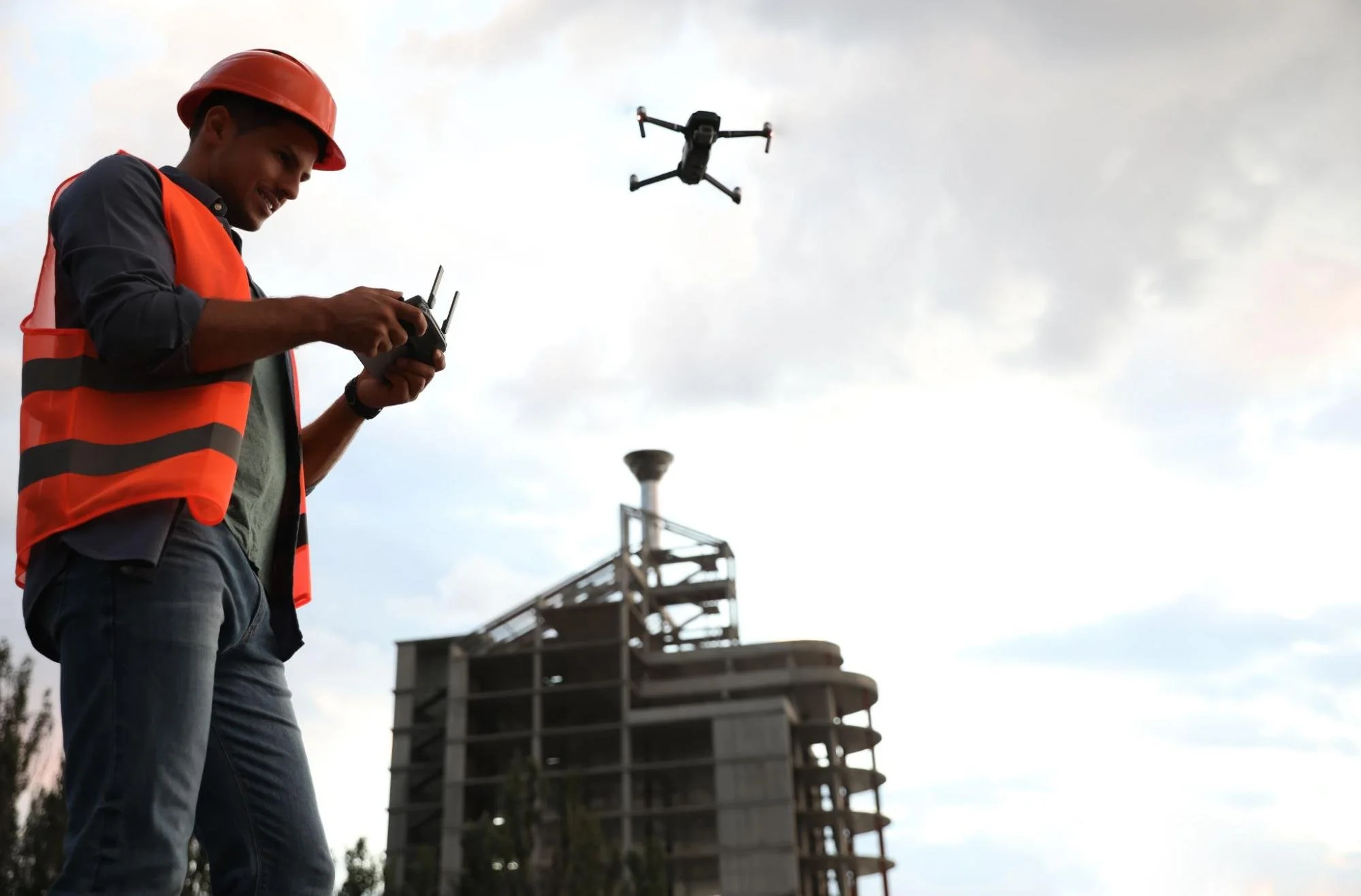
Surveyor operating a drone to inspect a building for construction analysis and site data

Safer Construction Site Monitoring

Drones allow teams to monitor hazardous areas without exposing workers to risk. This approach reduces accidents linked to difficult terrain or elevated structures. Site managers can inspect critical areas from a safe distance using aerial views. Regular monitoring helps identify safety concerns before they escalate. This oversight improves working conditions across the project. Safer environments support productivity and workforce stability.

Risks of Poor Site Data Without Drones

Construction projects often face setbacks when site data is inaccurate or insufficient. Incomplete information can lead to errors that affect timelines and budgets. These issues may not appear immediately, but often grow as the project progresses. Business owners who rely on outdated methods may encounter avoidable risks.

Costly Errors from Inaccurate Measurements

Incorrect measurements can lead to miscalculations in materials and site preparation. These errors often result in rework, increasing labor and material costs. Teams may need to revisit completed work to fix alignment or grading issues. This disruption affects both schedules and budgets. Accurate data reduces these risks and supports better planning. Without reliable measurements, small mistakes can escalate into expensive problems.

Delays Caused by Limited Site Visibility

Limited visibility into site conditions can slow decision-making and project progress. Managers may not notice issues until they become more difficult to resolve. This delay can affect multiple phases of construction and create scheduling conflicts. Teams may need additional site visits to gather missing information. These extra steps increase downtime and reduce efficiency. Better visibility helps prevent delays and keeps projects on track.

Missed Issues That Escalate Over Time

Undetected site issues can develop into larger problems if not addressed early. Small grading errors or structural concerns may worsen as construction continues. These problems often require more extensive fixes later in the project. Early detection allows teams to correct issues before they expand. Without detailed data, teams rely on assumptions that increase risk exposure. Proactive monitoring helps avoid complications that affect overall project success.

Common Uses of Drone Surveying

Drone surveying supports multiple construction activities from planning to project completion. It provides accurate data that improves coordination among teams. This method enhances visibility and communication across all stages. Projects benefit from fewer delays and better resource management.

Land Surveys and Site Planning

Accurate site mapping begins with aerial data that captures terrain conditions in detail. This data includes elevation changes, surface features, and potential obstacles across the property. Engineers rely on these insights to design layouts that align with real site conditions. Better planning supports grading, drainage, and foundation work from the start. Faster data collection also helps speed up approvals and early project preparation. Business owners gain confidence in their decisions when backed by reliable, up-to-date site information.

Progress Tracking and Reporting

Regular aerial updates provide a clear view of how construction progresses over time. These visuals allow stakeholders to monitor developments without frequent site visits. Project managers compare actual progress with planned timelines to identify gaps. This visibility improves accountability across teams working on different phases. Reports generated from updated imagery provide consistent, transparent communication. Better tracking supports informed decisions and keeps projects aligned with goals.

Volume Measurement and Materials

Precise measurements of materials help teams manage resources more efficiently on-site. Aerial data accurately calculates stockpile volumes and earthwork quantities. This information allows teams to track usage and adjust supply orders as needed. Better control reduces waste and prevents delays caused by shortages. Accurate volume tracking also supports budgeting and cost management. Business owners benefit from improved oversight of material allocation.

Inspections and Quality Control

High-resolution aerial imagery allows teams to review structures and site conditions in detail. This method identifies potential issues before they develop into larger concerns. Inspections can take place without interrupting ongoing construction activities. Clear visuals support compliance checks and quality standards across the project. Regular reviews help maintain consistent construction quality from start to finish. Early detection of problems reduces rework and improves overall outcomes.

Build Smarter With Drone Surveying Technology

Construction success depends on decisions backed by accurate, real-time data rather than assumptions. Drone surveying for construction provides a clear path to better planning, tighter cost control, and stronger coordination across teams. This approach allows business owners to respond quickly to changes while maintaining full visibility of site conditions. Companies that adopt this technology position themselves to handle complex projects with greater confidence and efficiency. Choosing smarter surveying methods today can support consistent performance and long-term business growth.

Get a clearer view of modern surveying solutions and smarter project planning. Read more on the LNE Surveys blog today.