Viewing entries in
Aerial Photography

Advantages of Aerial Drone Photography

Advantages of Aerial Drone Photography

A clear view of a site often determines how well decisions hold up over time. Ground-level visuals can miss relationships that matter during planning and evaluation. Overhead perspectives reveal scale, layout, and constraints in a way that supports confident interpretation. This broader visibility reduces uncertainty across teams and stakeholders. For professionals who rely on precision and defensible insight, aerial drone photography has become an essential visual tool.

What Aerial Drone Photography Provides for Site Work

Aerial drone photography provides controlled overhead visuals captured with high spatial consistency. This visual method reveals terrain, boundaries, and structures in a single frame. Professionals use this perspective to accurately interpret scale and layout. The imagery supports reliable planning, review, and documentation.

Why Overhead Views Improve Spatial Accuracy

Overhead views reduce distortion caused by uneven terrain and visual obstructions. This perspective presents features that are consistently aligned across the site. Professionals reference imagery to confirm measurements and relative positioning. Clear orientation supports accurate interpretation during analysis. Errors decrease when context remains visible. Accuracy improves without extending field time.

How Visual Context Strengthens Data Interpretation

Spatial interpretation depends on understanding how features relate to one another. Aerial imagery shows connections between land features, access points, and built elements. This context reduces ambiguity during technical review. Professionals interpret layouts with greater confidence. Visual clarity supports defensible conclusions. Clients also understand findings more easily.

Practical Uses of Aerial Drone Photography

Aerial drone photography adapts well to varied site conditions and project scopes. The technology supports documentation, analysis, and communication tasks efficiently. Professionals gain flexibility without compromising precision. This adaptability increases overall project efficiency.

Terrain and Surface Analysis From Above

Terrain analysis requires clear visibility of slopes and surface variation. Aerial imagery captures elevation changes and grading patterns comprehensively. Professionals visually identify drainage paths and surface inconsistencies. This coverage reduces reliance on repeated ground access. Safety improves while accuracy remains intact. Data interpretation becomes more efficient.

Boundary and Area Visualization

Clear visualization helps define site extents accurately. Aerial imagery clearly outlines boundaries and adjacent features. Professionals cross-reference visuals with measurement data. This process reduces misinterpretation during review. Visual confirmation supports consistency across deliverables. Communication improves through shared reference points.

Ongoing Site Monitoring and Documentation

Sites evolve throughout project lifecycles. Aerial visuals document changes consistently over time. Professionals track progress without interrupting operations. Visual records support planning and verification needs. Stakeholders receive clear updates. Documentation remains reliable and repeatable.

Why Aerial Drone Photography Delivers Clear Advantages

Aerial drone photography offers practical benefits that extend beyond visual appeal. Overhead perspectives improve understanding of land, structures, and conditions. This clarity supports better judgment during planning and evaluation. The following points illustrate how these advantages shape accuracy, efficiency, and dependable outcomes.

Efficiency in Field Operations

Field efficiency directly affects timelines and budgets. Aerial drone photography reduces on-site time. Larger areas are captured quickly with consistent detail. Efficiency improves without sacrificing accuracy.

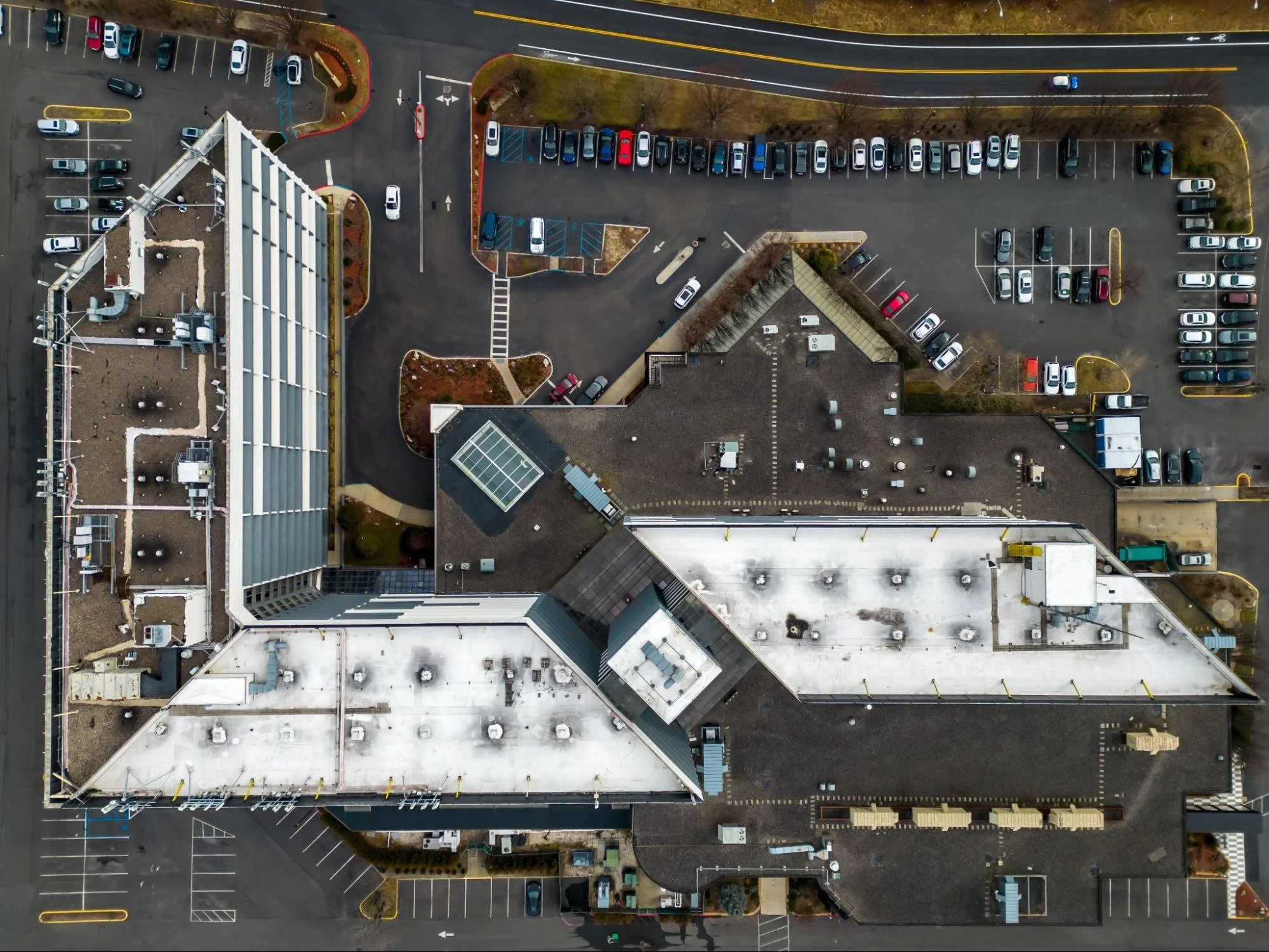
Aerial photo of a hotel showing the surrounding urban landscape

Reduced Time Spent in Difficult Terrain

Challenging terrain often slows traditional site work. Drones capture imagery without physical traversal. Professionals avoid unnecessary exposure to hazards. Field time decreases significantly. Teams focus more on analysis than access. Productivity improves across projects.

Faster Data Collection and Review

Drone flights capture extensive visual data rapidly. Processing tools efficiently convert imagery into usable outputs. Review cycles shorten as clarity improves. Faster turnaround supports tighter schedules. Clients receive results sooner. Timely delivery strengthens trust.

Improved Workflow Coordination

Visual data supports smoother coordination across teams. Shared imagery reduces back-and-forth clarification. Professionals align faster during reviews. Decisions rely on clear references. Workflow interruptions decrease. Project momentum improves.

Visual Continuity Across Project Lifecycles

Visual continuity means maintaining consistent visual references throughout the project. Aerial drone photography supports this continuity through repeatable perspectives. This consistency prevents gaps between early and later interpretations. Projects benefit when visual context remains stable over time.

How Consistent Views Reduce Interpretation Drift

Interpretation drift occurs when reference points change between phases. Repeated aerial perspectives maintain orientation and scale. Teams compare conditions accurately over time. This consistency prevents misalignment during transitions. Decisions remain anchored to the same visual baseline. Continuity reduces confusion naturally.

Supporting Handoffs Between Teams and Stakeholders

Projects often involve multiple teams over time. Aerial imagery provides a common visual language. New stakeholders understand conditions quickly. This shared reference reduces onboarding friction. Communication improves without lengthy explanations. Collaboration remains efficient and aligned.

Improved Safety Through Aerial Imaging

Safety remains a constant concern during site-based work. Aerial imagery reduces direct exposure to physical risks. Professionals maintain distance from unstable or restricted areas. This approach improves operational safety.

Minimizing Exposure to Hazardous Conditions

Steep slopes, traffic zones, and unstable surfaces present risks. Drones capture imagery without putting personnel at risk. Data quality remains high despite reduced access. Safety incidents decrease as exposure drops. Risk management improves naturally. Operations remain controlled.

Safer Access to Restricted or Inaccessible Areas

Some locations limit safe physical entry. Aerial imagery provides access without disruption. Professionals gather necessary data remotely. Compliance improves through controlled access. Safety planning becomes more effective. Coverage remains complete.

Cost Control Through Visual Efficiency

Cost management depends on reducing repeat effort. Aerial drone photography limits unnecessary site visits. Visual data remains reusable across project stages. These efficiencies support predictable budgeting.

Lower Long-Term Operational Costs

Traditional workflows often require repeated field checks. Aerial imagery reduces return trips. Professionals reuse captured visuals during analysis and reporting. Operational costs stabilize over time. Budget forecasting becomes more accurate. Financial efficiency supports sustainability.

Aerial drone photography of a large shopping center roof illustrating building footprint and roof design

Reduced Rework and Clarification Time

Clear visuals reduce misunderstandings. Professionals spend less time clarifying conditions. Rework decreases as interpretation improves. Teams resolve questions visually. Project costs remain controlled. Efficiency improves naturally.

Reliability and Documentation Confidence

Reliable documentation supports accountability and review. Aerial imagery provides consistent visual records. These records strengthen verification processes. Professional credibility improves through transparency.

Visual Records Support Verification Needs

Overhead images serve as permanent references. Professionals validate findings against imagery. Disputes are resolved more efficiently with visual evidence. Documentation supports audits and reviews. Clients trust clearly supported results. Confidence grows through transparency.

Consistent Documentation Across Project Phases

Consistency matters across project timelines. Aerial visuals maintain uniform reference points. Professionals compare changes accurately. Historical records remain accessible. Review processes improve. Documentation quality stays high.

Visual Accountability in Technical Decision-Making

Visual accountability refers to the ability to support decisions with clear, traceable imagery. Aerial drone photography provides a shared visual reference that teams can revisit over time. This accountability reduces reliance on memory or interpretation alone. Decisions grounded in visual evidence hold up better during reviews.

Why Visual Records Strengthen Decision Confidence

Visual records give professionals confidence because conditions are visible rather than assumed. This clarity reduces hesitation during approvals or sign-offs. Teams align faster when everyone sees the same reference point. Decisions feel defensible because imagery accurately documents conditions. Accountability improves when visuals directly support conclusions. Confidence increases without requiring additional explanation.

How Visual Evidence Supports Internal Review

Internal reviews often revisit earlier assumptions and judgments. Aerial imagery allows reviewers to confirm context without revisiting the site. This visual reference significantly shortens review cycles. Disagreements resolve faster when imagery replaces interpretation. Teams spend less time debating conditions. Outcomes remain grounded in documented reality.

Why Professionals Rely on Aerial Drone Photography

Modern site-focused work demands accuracy, efficiency, and clarity. Aerial drone photography supports all three without added complexity. Visual data strengthens communication across teams. Professionals gain reliable insights with less disruption.

Stronger Positioning Through Technical Capability

Clients expect precise and efficient site evaluation. Aerial imagery demonstrates technical competence visually. Professionals appear prepared and methodical. Deliverables become easier to understand. Confidence builds through clear presentation. Reputation strengthens through consistency.

Clear Communication With Stakeholders

Stakeholders prefer clarity over explanation. Visual references simplify discussions. Meetings become more productive. Misinterpretation decreases. Alignment improves across parties. Trust builds naturally.

Consistent Visual Standards Across Deliverables

Professionals rely on consistent visual standards to maintain clarity across outputs. Aerial drone photography provides consistent perspectives, reducing variation across deliverables. This consistency makes comparisons easier over time. Teams reference the same visual framework during reviews and updates. Misalignment decreases when visuals adhere to established standards. Professional outputs remain clear and defensible.

Perception Risk From Incomplete Visual Coverage

Perception risk arises when decisions rely on partial or unclear visuals. Limited visibility increases assumptions and misinterpretations. Aerial drone photography reduces this risk by showing the full context. Clear visuals support accurate understanding before decisions are made.

How Limited Visibility Leads to Costly Assumptions

Partial views often force professionals to infer missing details. These assumptions increase the chance of error—misjudgments compound as projects progress. Aerial imagery reduces guesswork by clearly revealing conditions. Decisions become more informed. Risk decreases through visibility.

Visual Clarity as a Trust-Building Mechanism

Clear visuals influence how others perceive work. Stakeholders trust conclusions they can see. Transparency improves when conditions are visible. Confidence grows without persuasion. Visual clarity strengthens professional credibility. Trust becomes a byproduct of openness.

Integrate Aerial Drone Photography Into Site Strategy

Aerial drone photography provides the clarity needed to align planning, evaluation, and execution with real conditions. When teams rely on complete visual context, decisions become easier to justify and communicate. This approach reduces uncertainty across workflows while improving consistency and accountability. Integrating aerial imaging into site strategy supports stronger outcomes built on visible, verifiable information.


See how modern site evaluation approaches are shaping better outcomes on the LNE Surveys blog.

What is Aerial Photography and Why is it Important for Surveyors?

What is Aerial Photography and Why is it Important for Surveyors?

Aerial photography has become a practical concern for business owners managing land, construction, and infrastructure assets. Surveying decisions increasingly depend on fast, accurate visual data captured beyond ground limitations. Modern projects demand wider site visibility without constant physical access or operational disruption. Aerial imagery answers that demand through precise overhead data collection. Business leaders who understand this method gain clearer insight into risk, compliance, and development planning.

What Is Aerial Photography in Surveying

Aerial photography is the capture of images of land from elevated platforms for measurement and analysis. Surveyors use this method to document terrain, structures, and surface conditions with a consistent scale. This aerial approach replaces fragmented ground views with unified spatial data. Such coverage supports reliable planning, mapping, and long-term land management decisions.

Defining What Aerial Photography is

Aerial photography involves capturing images above ground using controlled flight paths. These images record surface features that ground cameras often miss or distort. Surveyors rely on these visuals to measure distances, elevations, and spatial relationships. Each image aligns with geographic coordinates for mapping accuracy. This technical alignment reduces interpretation errors across projects. Business owners benefit from more precise, repeatable site documentation.

Aerial Photography Platforms Used by Surveyors

Aerial photography platforms include drones, fixed-wing aircraft, and helicopters. Drones dominate commercial surveying due to flexibility and operational control. Aircraft remain useful for large corridors and regional mapping. Each platform carries calibrated cameras and positioning sensors. These systems collect imagery with known scale and orientation. Surveyors select platforms based on site size, accuracy needs, and airspace limits.

How Aerial Images Become Survey Data

Aerial images become survey data through structured processing workflows. Specialized software stitches images into seamless, georeferenced maps. These processed visuals convert pixels into measurable coordinates. Surveyors overlay elevation data and control points for verification. This technical process supports contours, volumes, and site models. Data consistency improves when imagery follows planned capture patterns.

Why Surveyors Rely on Aerial Photography

Surveyors rely on aerial photography to meet rising expectations for speed and accuracy. Projects demand reliable data without extended field exposure. Aerial capture supports efficient workflows across complex sites. This approach improves productivity while maintaining professional standards.

Faster Survey Coverage Across Large Sites

Aerial photography captures entire sites within hours rather than days. Surveyors avoid repeated repositioning of ground instruments. Large parcels become manageable within short schedules. Data remains uniform across the whole area. This operational efficiency shortens project timelines. Clients receive deliverables without unnecessary delays.

Reduced Need for Physical Site Access

Many sites contain hazards such as slopes or active equipment. Aerial photography limits the need for surveyors to enter these areas. This controlled approach improves safety outcomes. It also avoids delays caused by access restrictions. Survey teams maintain data quality without physical risk. Business owners benefit from uninterrupted project progress.

Consistent Data for Repeat Surveys

Surveying projects often require repeated measurements over time. Aerial photography supports identical repeat flights. Each flight follows the same altitude, overlap, and path. This technical consistency allows accurate comparisons. Changes become easy to detect and quantify. Long-term projects gain dependable tracking data.

Two engineers monitor a drone conducting aerial photography over a near-complete construction site

Aerial Photography Applications in Surveying

Aerial photography supports many surveying applications across industries. These uses extend beyond simple mapping tasks. Surveyors use aerial data for planning, monitoring, and compliance. Each application adds measurable value to commercial projects.

Topographic Mapping and Elevation Analysis

Aerial photography captures elevation variations across land surfaces. Surveyors convert these images into contour and slope models. These outputs guide drainage, grading, and design decisions. Developers use this information during feasibility reviews. Accurate elevation data reduces design revisions. Projects advance with fewer unknowns.

Boundary and Property Line Surveys

Surveyors use aerial imagery to clearly visualize property boundaries. These visuals support deed research and legal descriptions. Overhead views highlight encroachments or irregular parcels. This visual clarity speeds dispute resolution. Property owners gain defensible land records. Planning decisions rest on verified information.

Construction Progress Documentation

Construction sites change rapidly during active phases. Aerial photography documents progress without disrupting operations. Surveyors visually track earthworks and structural placement. These records support billing and milestone validation. Stakeholders review progress remotely. Communication improves across teams and investors.

Infrastructure and Utility Mapping

Surveyors map roads, pipelines, and utilities from overhead perspectives. Aerial imagery clearly captures alignment and surface conditions. This approach reduces traffic interference during surveys. Maintenance planning benefits from accurate visuals. Asset managers identify issues earlier. Infrastructure oversight becomes more efficient.

Business Value of Aerial Photography Services

Aerial photography delivers operational value beyond technical accuracy. Business owners evaluate surveying methods based on efficiency and clarity. Aerial data supports informed planning and oversight. These benefits strengthen business decision-making.

Cost Efficiency Through Streamlined Surveys

Aerial surveys reduce labor hours and field time—fewer site visits lower operational expenses. Equipment deployment becomes simpler and faster. Projects avoid downtime waiting for data. Cost savings scale across multiple sites. Budget forecasting becomes more predictable.

Improved Communication Using Visual Data

Images explain site conditions faster than text reports alone. Business owners share visuals with partners and investors. Issues become easier to understand and address. Meetings focus on solutions rather than interpretation. Visual transparency builds trust. Decision cycles shorten across teams.

Stronger Planning Confidence for Developments

Aerial imagery reduces uncertainty during planning stages. Surveyors deliver accurate site visuals early. Business owners assess constraints before committing resources. Design teams work with reliable context. Fewer surprises emerge during construction. Planning outcomes improve consistently.

Low-angle view of a drone equipped with propeller guards conducting aerial photography near a building façade

Accuracy Standards in Aerial Survey Photography

Surveying accuracy depends on controlled systems and verification. Aerial photography meets professional standards through calibrated workflows. Each step supports reliable measurements. Accuracy protects client confidence and compliance.

Survey-Grade Cameras and Sensors

Professional aerial surveys use high-resolution cameras. These sensors consistently capture detailed surface features. Calibration maintains scale accuracy across images. Surveyors verify equipment performance regularly. This technical discipline supports reliable measurements. Quality tools reinforce dependable results.

Ground Control and Verification Methods

Surveyors place control points across sites. These references anchor aerial imagery to known coordinates. Verification aligns images with real-world measurements. Accuracy improves across large areas. Errors become detectable and correctable. Data integrity remains protected.

Quality Review During Data Processing

Surveyors process imagery through structured software checks. These systems review alignment and distortion. Technicians verify outputs against control data. Corrections occur before final delivery. Quality review prevents costly revisions. Clients receive dependable datasets.

Safety and Compliance in Aerial Photography

Aerial photography supports safer surveying practices. Regulatory frameworks guide commercial operations. Responsible use protects people and projects. Compliance reinforces professional credibility.

Reduced Safety Exposure for Survey Teams

Aerial surveys limit the time spent in hazardous areas. Surveyors avoid unstable terrain and heavy machinery zones. This operational choice lowers injury risk. Safety planning becomes simpler. Insurance exposure decreases. Projects proceed with fewer disruptions.

Regulatory Standards for Commercial Flights

Commercial aerial photography follows aviation regulations. Surveyors maintain required certifications. Flight plans respect airspace restrictions. Compliance avoids legal issues. Clients benefit from accountable operations. Professional standards guide every survey flight.

Data Security and Privacy Management

Survey imagery may include sensitive locations. Surveyors manage access carefully. Secure storage protects client data. Usage agreements define data boundaries. Privacy expectations remain respected. Trust strengthens professional relationships.

Aerial Photography as a Risk Management Tool

Most discussions frame aerial photography as a data collection method, but its deeper value lies in risk control. Business owners often underestimate the impact of visual records on liability, compliance, and dispute resolution. Aerial imagery creates time-stamped evidence that supports decisions long after projects end. This function shifts aerial photography from a survey expense to a protective business asset.

How Visual Records Reduce Legal and Financial Risk

Aerial photography creates verifiable documentation of site conditions at specific moments. This documentation protects businesses during disputes over boundaries, damages, or construction claims. Courts and regulators often favor objective visual evidence over written descriptions. Aerial records clarify responsibility when conditions change over time. This clarity limits prolonged legal exposure. Businesses gain defensible proof without relying on memory or third-party testimony.

Why Survey Imagery Matters for Insurance and Claims

Insurance claims often depend on proving site conditions before incidents occur. Aerial photography provides independent, dated visual proof. Insurers review imagery to validate timelines and the cause of damage. This verification speeds claims processing and reduces disputes. Businesses avoid costly claim delays. Survey-grade imagery strengthens negotiation positions during settlements.

Aerial Photography and Long-Term Asset Intelligence

Aerial photography supports more than single-project decisions. Over time, it builds a visual intelligence archive for land and infrastructure assets. Few businesses treat this archive strategically—those who do gain an operational advantage.

Building a Visual History of Commercial Assets

Repeated aerial surveys create a chronological visual record. This record tracks wear, expansion, and environmental change. Asset managers review patterns rather than isolated snapshots. This historical perspective supports maintenance planning. Capital allocation becomes more informed. Businesses avoid reactive spending driven by surprises.

Supporting Valuations and Due Diligence

Property valuations increasingly rely on verifiable site data. Aerial imagery supports due diligence during acquisitions or divestments. Buyers assess access, condition, and constraints visually. Sellers present transparent documentation that builds confidence. This visibility reduces negotiation friction. Transactions move forward with fewer contingencies.

Leverage Aerial Photography for Informed Planning

Aerial photography provides business owners with a clearer basis for decisions that affect costs, timing, and long-term value. Reliable overhead data replaces assumptions with verifiable site intelligence that teams can reference at every stage. When planning relies on consistent visual records, risks become easier to manage and opportunities easier to evaluate. Integrating aerial photography into surveying workflows supports more confident approvals, stronger oversight, and decisions grounded in evidence rather than uncertainty.

Find clear explanations, industry knowledge, and real-world surveying guidance on the LNE Surveys blog.

How Aerial Photography Enhances Accuracy in Commercial As-Built Surveys

How Aerial Photography Enhances Accuracy in Commercial As-Built Surveys

Accuracy drives every successful commercial construction project. From initial planning to final inspection, precise as-built data determines how smoothly operations proceed and how confidently investors make decisions. When measurements are off, even slightly, the results can lead to rework, delays, and added costs. Aerial photography offers a more innovative, faster, and more reliable way to document and verify every stage of construction with precision that ground surveys can rarely achieve.

The Role of Aerial Photography in Commercial Surveys

Aerial photography captures detailed, overhead images that blueprint a project’s real-world conditions. These images provide unmatched visibility for developers, engineers, and project managers working on large or complex commercial sites. Unlike traditional surveying, which relies on manual measurements and ground-level observation, aerial methods consistently cover vast areas. Speed, precision, and safety make aerial imaging indispensable for modern as-built documentation.

Understanding Commercial As-Built Surveys

Commercial as-built surveys record a project’s exact dimensions and layout once construction is complete. These surveys confirm whether the final structure matches approved designs and specifications. Aerial imaging enriches this process by capturing detailed, high-resolution visuals that make verification easier. For example, property managers can quickly detect deviations between planned and actual builds using layered aerial maps. This accuracy improves accountability and simplifies future renovations, asset management, or regulatory inspections.

Traditional Surveying Limitations

Traditional surveys often face challenges that impact their reliability and efficiency. Manual measurements are slower and more vulnerable to human error, especially in uneven or obstructed terrains. Moreover, large commercial sites require multiple survey teams, which increases time and cost. These constraints make it challenging to achieve consistent accuracy across every part of a project. Aerial photography solves these problems by gathering precise data from the sky, delivering uniform results regardless of terrain or accessibility.

Advantages of Aerial Imaging for Businesses

Aerial imaging speeds up project timelines while maintaining high measurement standards. Surveyors can capture data from hundreds of angles within a single flight, producing comprehensive visual coverage. This process reduces labor requirements and minimizes safety risks by limiting ground exposure. Additionally, aerial photography improves collaboration by giving all project stakeholders an apparent visual reference. Businesses benefit from faster reporting, fewer errors, and greater confidence in their construction documentation.

How Aerial Photography Improves Measurement Accuracy

Aerial photography enhances measurement precision through data-driven imaging techniques and advanced mapping software. It converts thousands of overlapping photos into accurate, scalable maps that reflect true distances and elevations. This technology ensures that commercial projects meet exacting measurement standards from start to finish. As a result, developers and engineers can trust that every dimension and feature is captured accurately.

The Impact of Photogrammetry and 3D Modeling

Photogrammetry uses overlapping aerial images to create precise three-dimensional models. Each image contributes spatial data that accurately defines structures, surfaces, and elevations. Surveyors can use these models to directly measure areas, volumes, and heights from the imagery. For commercial developments, this allows teams to verify progress without interrupting operations. The resulting 3D visualizations offer measurement accuracy and an intuitive understanding of the built environment.

Orthomosaic Imaging for Large-Scale Sites

Orthomosaic imaging stitches multiple aerial photographs into one uniform, distortion-free map. Each pixel in this map corresponds to a real-world coordinate, ensuring exact spatial accuracy. That makes orthomosaics ideal for large commercial properties such as warehouses, shopping centers, and industrial facilities. Engineers and project managers use these images to precisely verify construction alignment and site layout. Additionally, orthomosaic data integrates seamlessly with CAD and GIS tools, supporting data-driven design and maintenance decisions.

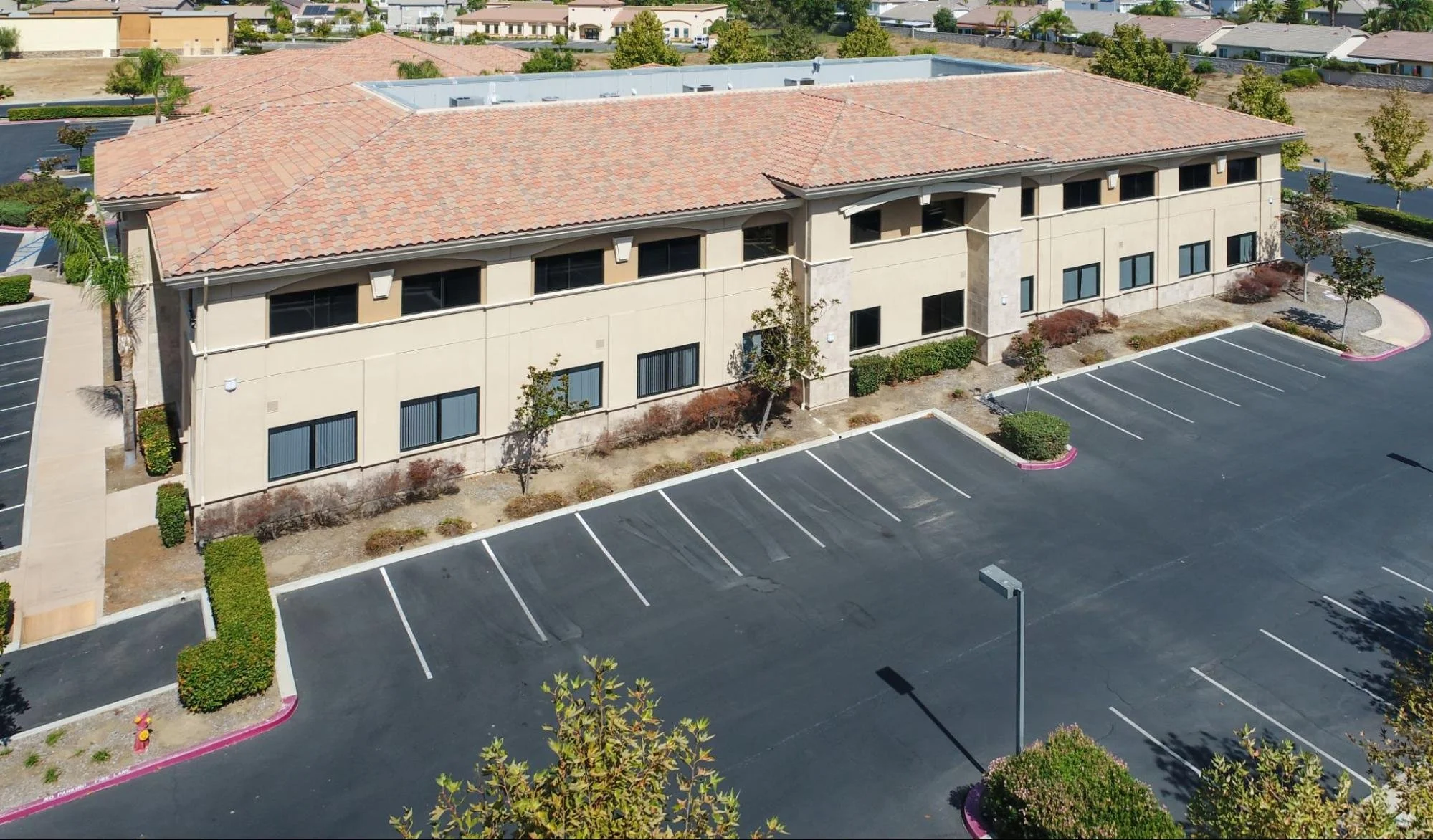
Aerial view of modern commercial office buildings with parking lots and surrounding trees

Drone Accuracy With RTK and PPK Systems

Modern drones with RTK (Real-Time Kinematic) or PPK (Post-Processed Kinematic) systems deliver centimeter-level accuracy. These GPS-based corrections synchronize each captured image with exact geographic coordinates, eliminating measurement drift and improving consistency across repeated flights. Commercial projects benefit from highly repeatable surveys that maintain precision over time. Similarly, these drones can monitor site changes continuously, providing updated documentation throughout construction phases.

Reducing Human Error With Automated Capture

Automated drone surveys follow pre-programmed flight paths, removing inconsistencies caused by manual operation. Each mission captures images at the same altitude, angle, and overlap ratio, guaranteeing data uniformity. Advanced processing software further refines these results by automatically correcting any positional discrepancies. This automation reduces field time for commercial sites with tight schedules while maintaining dependable accuracy. It also ensures that data quality remains consistent across all project stages.

Aerial Photography for Compliance and Documentation

Aerial photography simplifies compliance by creating verifiable, time-stamped visual records of completed work. These records help construction teams demonstrate adherence to regulatory standards and client specifications. For business owners and managers, aerial documentation provides transparency that builds stakeholder trust. It is also a reliable archive for future reference, audits, or property transactions.

Meeting Construction and Safety Regulations

Aerial data supports compliance with zoning, safety, and environmental regulations by providing detailed evidence of on-site conditions. Regulatory inspectors use these visuals to confirm layout accuracy, drainage management, and safety barrier placement. The imagery captures all visible infrastructure components, creating a transparent, permanent record. Similarly, project managers can reference these images during internal reviews or external audits. This visual verification saves time and minimizes disputes over compliance documentation.

Strengthening Stakeholder Communication

Aerial imagery enhances communication between project owners, contractors, and clients through clear visual updates. Instead of relying on lengthy technical reports, managers can present aerial visuals that instantly convey progress and quality. These images simplify project tracking for remote teams and investors. Additionally, integrating aerial visuals into reports improves transparency and accountability across the entire construction process. As a result, stakeholders gain a shared understanding of project milestones and outcomes.

Legal and Financial Assurance

Aerial photographs also act as legal and financial safeguards for businesses. Contractors can use dated aerial images to verify completed milestones before payment approvals. Insurers rely on them for claim validation, while legal teams use them to resolve boundary or property disputes. The visual nature of this documentation eliminates ambiguity, ensuring all parties work from the same verified evidence. This clarity helps maintain fairness, transparency, and trust among project stakeholders.

Optimizing Project Costs With Aerial Efficiency

Aerial photography directly supports cost control and time management in commercial projects. It captures comprehensive site data faster than ground surveys, cutting field time and labor expenses. The improved accuracy reduces costly rework and delays, allowing smoother project execution. Businesses can allocate resources efficiently and maintain predictable budgets throughout construction.

Saving Time With Faster Data Capture

Traditional surveys require extended on-site hours and multiple personnel. Aerial imaging drastically shortens this process, capturing the exact scope of data in a fraction of the time. The faster turnaround accelerates reporting and decision-making. Additionally, aerial capture does not interfere with ongoing construction or operations. Businesses gain accurate updates without slowing down productivity, improving efficiency and profitability.

Preventing Costly Rework and Errors

Aerial data identifies inconsistencies or design deviations before they escalate into expensive issues. Teams can spot misalignments or elevation mismatches early, preventing future structural or design conflicts. Frequent aerial updates maintain up-to-date records that guide construction adjustments in real time. Similarly, this proactive oversight minimizes project downtime and enhances schedule predictability. Over the long term, these benefits translate into measurable cost savings and reduced material waste.

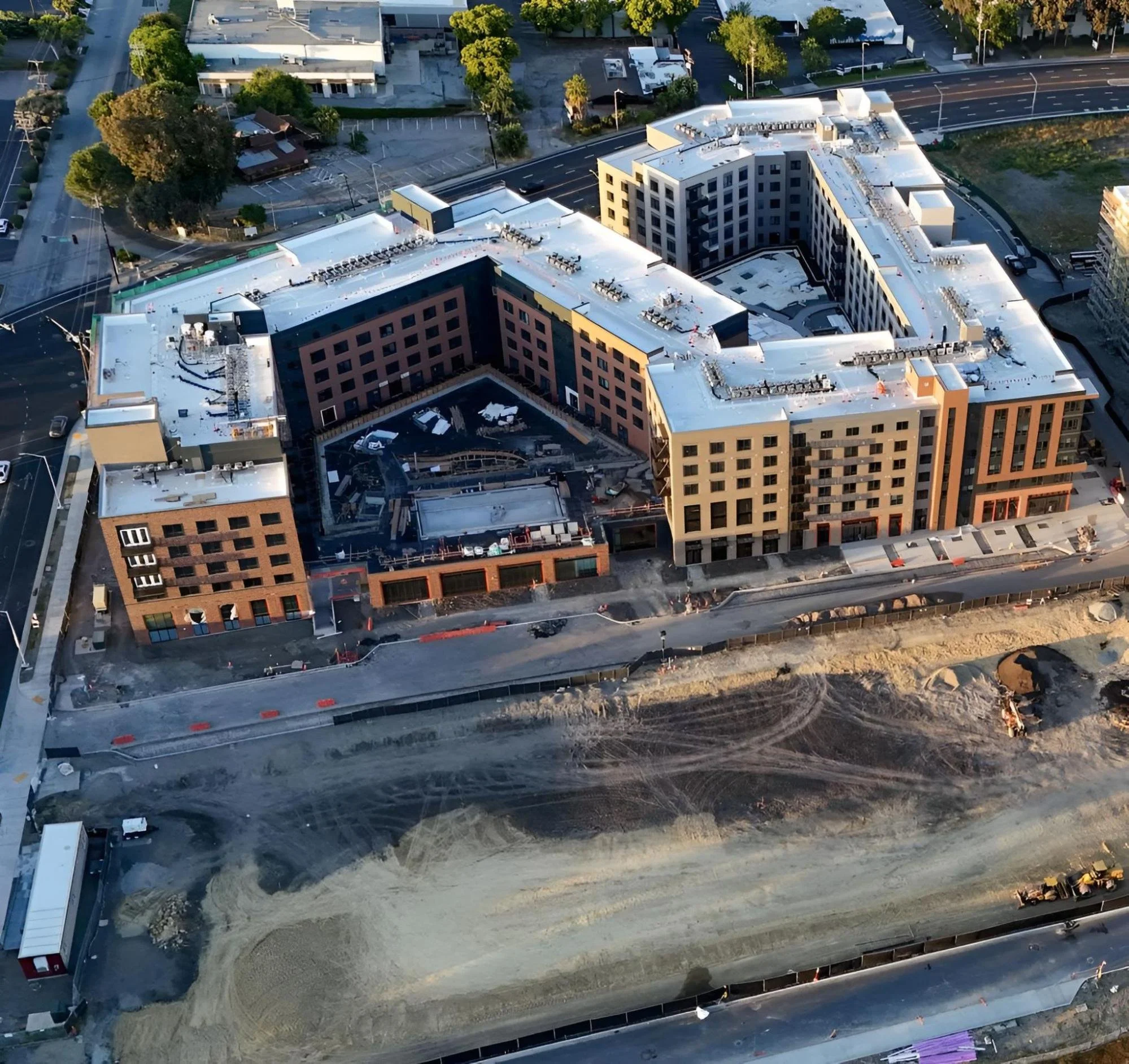
Aerial view of an as-built factory headquarters with industrial lorries on site

Integrating Aerial Data With Modern Survey Tools

Combining aerial photography with digital survey technologies multiplies its value. This integration connects visual accuracy with analytical depth, providing a comprehensive view of project conditions. Businesses can merge aerial images with LiDAR, GIS, or BIM systems to create a unified, data-rich environment. The result is a more efficient, collaborative, and intelligent approach to construction documentation.

Merging Aerial Imagery With LiDAR and GIS

LiDAR captures elevation and surface detail using laser scanning, while aerial images provide visual texture and context. When integrated, they deliver a complete representation of the project area. GIS systems further enhance this data by mapping coordinates and infrastructure relationships. This combination supports asset tracking, land-use planning, and environmental assessment for commercial projects. It also gives managers a deeper understanding of spatial interactions across their properties.

Cloud Platforms for Data Access and Storage

Cloud-based platforms store aerial data securely and make it accessible to all project participants. This accessibility eliminates the delays and limitations of traditional file sharing. Teams can access, analyze, and update information from anywhere, improving collaboration and transparency. Furthermore, cloud systems offer scalable storage for ongoing projects and future reference. The ability to manage large datasets efficiently enhances project continuity and accountability.

Aerial Data in Building Information Modeling

Building Information Modeling (BIM) thrives on accurate, real-world data inputs. Aerial imagery adds contextual depth to BIM models by aligning visuals with structural measurements. This integration enables designers and engineers to identify potential conflicts before construction begins. Over time, BIM models enriched with aerial data also support facility maintenance and performance tracking. Integrating visual and analytical tools creates more reliable, actionable project insights.

The Evolving Role of Aerial Photography in Surveys

The future of commercial as-built surveying lies in automation, precision, and real-time analytics. Aerial photography continues to evolve through AI-driven image processing and smart sensor technology. These advancements allow surveyors to collect richer, faster, more actionable data. As these tools mature, they redefine how construction professionals plan, monitor, and manage their projects.

Predictive Insights With AI and Automation

Artificial intelligence now interprets aerial imagery to detect defects, misalignments, or material degradation automatically. These predictive insights help construction teams schedule maintenance and prevent costly repairs. Automated analysis shortens reporting time and minimizes manual interpretation. Additionally, it improves decision-making by providing reliable, data-backed recommendations. For large commercial properties, this capability ensures long-term performance and structural integrity.

Expanding Use Cases in Commercial Real Estate

Aerial photography extends its value beyond construction surveys into property management and marketing. Real estate developers use it to showcase assets, assess property conditions, and plan renovations. Investors gain an overhead view of accessibility, layout, and nearby infrastructure. Similarly, property managers rely on aerial data for routine inspections and facility documentation. This expanded utility demonstrates how aerial imaging adds value across the entire real estate ecosystem.

Drive Better Outcomes Through Aerial Documentation

Aerial surveyors deliver more than images; they provide measurable insight that strengthens every decision. Their expertise turns complex construction data into clear, actionable information that minimizes risk and maximizes precision. For commercial projects that demand accuracy and accountability, their work ensures every detail aligns with real-world conditions. Partnering with skilled aerial surveyors today positions your business to build smarter, faster, and with confidence that lasts well beyond project completion.


Explore how precision shapes progress—visit the LNE Surveys blog for real-world insights on aerial data and smarter construction outcomes.

How Aerial Photography Enhances Accuracy in Building Surveys

How Aerial Photography Enhances Accuracy in Building Surveys

In commercial construction and real estate, accuracy is not a luxury—it’s a requirement. Building surveys form the foundation for everything from design to compliance and future asset management. When surveying multi-story offices, industrial plants, or retail complexes, the need for precise, scalable, and safe data collection has grown exponentially. That’s where aerial photography becomes an indispensable tool.